
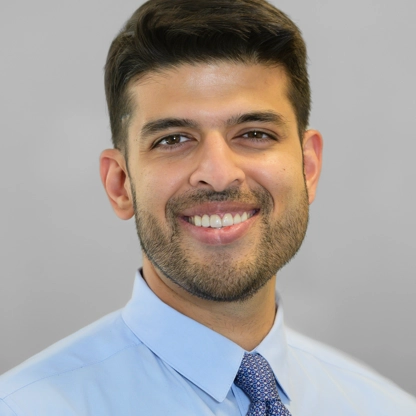
Sameer Kadri, MD, MS, FACP, FIDSA, has emerged as a global leader in harnessing data science to address pressing questions in infectious diseases related to antimicrobial resistance, sepsis, the COVID-19 pandemic and other epidemiological challenges. He has conducted pivotal studies with tremendous speed that have had significant national and global impact.
A physician investigator in the Critical Care Medicine Department at the National Institutes of Health’s Clinical Center in Bethesda, Maryland, Dr. Kadri practices in the intensive care unit, serves as a tenure-track NIH principal investigator, supervises a data lab and trains fellows.
A master collaborator, Dr. Kadri created a Clinical Epidemiology Section focused on data science at NIH, negotiated access to multihospital electronic health record databases and assembled scientists from across organizations to facilitate key studies. The work Dr. Kadri did to build these resources, boost analytic capacity and foster interagency relationships was instrumental when the COVID-19 pandemic began, enabling him to pivot to studying time-sensitive challenges to inform the national COVID-19 response. By integrating data from hundreds of hospitals and millions of patients, Dr. Kadri was able to rapidly distill answers to key questions — findings that were used to guide government planning and rapid guidelines and inform agency leaders’ messaging to the public.
In 2022, Dr. Kadri led a rapid analysis, published in MMWR, showing how incredibly protective COVID vaccination was against mortality during the pre-Omicron period.
Aside from his impact related to COVID-19, Dr. Kadri developed the “difficult-to-treat resistance,” or DTR, framework, which considers in vitro activity and a drug’s clinical safety and efficacy, thus adding antibiotic “quality” to in vitro resistance. Working with the Centers for Disease Control and Prevention, he demonstrated and externally validated this concept’s prognostic utility and clinical relevance, paving the way for its use at the bedside, in practice guidelines and antibiotic development and testing.
For newer antibiotics, Dr. Kadri has addressed pressing questions on market size and utilization. He demonstrated that lack of novel antibiotic susceptibility testing in many U.S. hospitals is a major impediment to utilization of newer drugs, highlighting the need for faster approval and implementation of susceptibility platforms to encourage timely utilization of newly approved antibiotics.
Dr. Kadri has authored over 130 peer-reviewed publications and held various editorial positions. He serves on the IDSA Sepsis Advisory Panel and has served on several other task forces and technical expert panels. He has been awarded intramural, Food and Drug Administration, and foundational grant funding and recently won the NIH Director’s Challenge Grant to use machine learning to improve antibiotic prescribing in hospital-onset sepsis. He has been a recipient of the Harvard T.H. Chan Emerging Health Care Professional Award and the NIH Ruth Kirschstein Award for Excellence in Mentoring, among several other honors. His research lab was recently awarded the National Heart, Lung and Blood Institute Director’s Award for COVID-19 Response.
IDSA is pleased to recognize Dr. Kadri with the 2025 Oswald Avery Award for Early Achievement.