
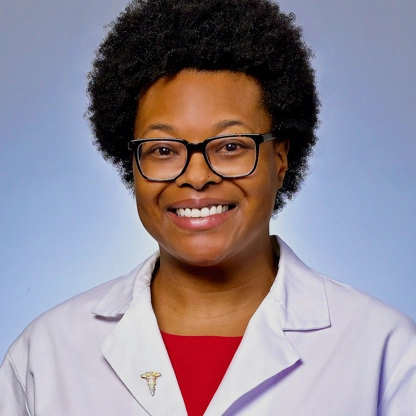
Please describe your work in advancing health equity in infectious diseases. What are you most proud of and what has been its impact on reducing health disparities?
My clinical practice, research and professional advocacy work have focused on fostering more equitable sexual health care service provision for LGBTQ+ patients with multiple marginalized identities through the elimination of provider-level and organization-level stigma, discrimination and other barriers to equitable care. I previously served as a member of the Health Equity Alliance in the Penn Medicine Center for Health Equity Advancement, leading professional development workshops on LGBTQ health inequities for medical providers across the Penn Medicine health system.
I have been involved in my institution’s Program for LGBTQ+ Health since 2019, and my work has included an ongoing multiyear interdisciplinary effort to embed cultural humility and antiracism principles and cultural norms across the institution and within the ID division, with particular attention to strategies for improving HIV and STI counseling, testing, prevention and treatment in ways that are affirming for patients and avoid perpetuating stigma against patients. I also served as the medical director for the Program for LGBTQ+ Health’s community health booth in partnership with the Philadelphia Department of Public Health at the LGBTQIA+ Pride Festival, where our team administered mpox vaccines to community members who were previously unable to access the vaccine. Lastly, as a member of the University of Pennsylvania Perelman School of Medicine’s mentorship program and Penn Eidos LGBTQ+ Health Initiative, I have served as the primary mentor for multiple LGBTQ+, Black and Latine medical students and had the opportunity to contribute to their development as medical learners and researchers in the field of HIV medicine.
At the state and national level, I have served on the American Academy of HIV Medicine’s Pennsylvania Steering Committee and National Public Policy Committee since 2022, focusing on initiatives to advocate for sustained and expanded investment in biomedical HIV prevention services and more recently to identify the risks of federal policy backsliding, including how U.S. decisions will hinder current global HIV prevention efforts and disproportionately harm communities that already experience significant structural barriers to prevention services. In addition, I was selected to be one of six fellows in 2024-2025 JAMA Network Open Health Equity Editorial Fellowship program. During my fellowship, I published an editorial regarding racial inequity and structural barriers to COVID-19 services and the need for bolstered clinician advocacy initiatives to restore and expand federal policies and programs that helped enhance the public health response to a devastating global pandemic and address structural racism as a fundamental cause of racial inequities in health care infrastructure and services.
I am most proud that my work has afforded me opportunities to leverage my expertise as an infectious diseases specialist and health equity scholar to cultivate interdisciplinary collaborations with other clinicians and researchers within and outside of my home institution to improve care for patients from communities disproportionately affected by HIV and decouple PrEP provision from siloed HIV/STI settings.
What inspired you to focus on health equity? How has it shaped your career?
I have been profoundly inspired and honored by the trust and clinical relationships I have built with patients and colleagues from communities disproportionately affected by HIV. As a Black queer cisgender female ID physician-scientist, there aren’t a lot of people like me in many of the spaces in which I work. My perspective and approach to HIV/PrEP-related clinical care and research have been deeply informed by my patients’ and research participants’ experiences and eagerness to engage openly with their medical providers as their authentic selves.
I have come to better appreciate the ways in which racism, sexism, heterosexism, biased application of policies, and scarcity of economic and social resources have resulted in unremitting exposure to structural conditions that increase vulnerability to HIV and adverse health outcomes. It is vitally important to me that I leverage my privilege as a physician to center health justice in my work and address the ways in which interconnected social, structural and systemic oppression perpetuate HIV/PrEP inequity.
What advice would you give to others looking to drive meaningful change in health equity?
My advice, for what it’s worth, is to figure out what is important to you first and why. Why are you committing yourself to this work when there are easier paths to take that don’t force you to both confront the ways in which oppression creates health inequity and earnestly reckon with the ways in which your own privilege and actions may perpetuate that harm? I think it’s important to anticipate that some colleagues and institutional leaders may question the significance of this work and try to dissuade you. If you don’t have an internal sense of commitment, you will be deterred or may feel compelled to engage in this work without honesty, accountability and authenticity. Finally, grow accustomed to being the only person in the room who speaks up when harmful things happen that folks would rather not acknowledge, particularly in the current sociopolitical environment.