
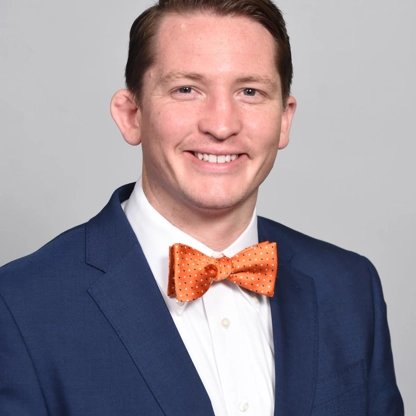
Please describe your work in advancing health equity in infectious diseases. What are you most proud of and what has been its impact on reducing health disparities?
I founded and now run a nonprofit organization called Street Medicine St. Louis, which provides outreach medical care to people who are housing-unstable. This was started as a solo endeavor during my infectious diseases fellowship after I met a homeless patient admitted with endocarditis. Without a home, phone, transportation, etc., his care was complicated and fragmented. His pathway into the health care system was difficult and, even when hospitalized, he had trouble feeling heard by his medical team. He taught me that a different solution was needed for patients living on the fringes of modern society.
Currently, Street Medicine St. Louis provides outreach medical care to approximately 400 unique individuals, most of whom are living completely unsheltered in the St. Louis region. We have grown to include three employees and dozens of volunteers, providing street rounds and pop-up clinics multiple times per week. We provide a range of services, including infection prevention and safer sex supplies, antibiotics and wound care, and treatment of mental health and substance use disorders. This organization provides a vital service, empowering those who otherwise have little to no access to health care.
This work has been important for reducing health disparities in infectious diseases. We know that many infections, such as HIV and viral hepatitis, disproportionately impact homeless people. Through this work, we have been able to offer screenings, treatments and preventative services aimed at reducing not only communicable viral illnesses but also the complications of more common bacterial infections. Through early evaluation and treatment, we have treated wounds, skin and soft tissue infections, and pneumonias, mitigating their downstream complications.
I am most proud of the ripple effect this work has had on the community. Being primarily composed of volunteers, we attract an incredible diversity of wonderful humans. From pre-med students to seasoned and retired clinicians, we interact with a wide spectrum of individuals across many areas of medicine. What we have seen is that our volunteers not only provide services for our patients, but they also take their experiences with them. Getting to work directly with unhoused people contextualizes these patients, and these experiences help make the health care system a little more person-centered. Our volunteers have gone on to do incredible things, including creating a region-wide symposium on unhoused health care and forming a medical student group to improve med student education on care of the homeless patient. I am proud that Street Medicine St. Louis has been a catalyst for change in our region.
What inspired you to focus on health equity? How has it shaped your career?
There is a quote I read many years ago that has underpinned much of my work. Faith Fitzgerald, MD, MACP, an internal medicine doctor, once said, “So much of good health is based on luck – where you live, who your parents were, what you were exposed to. I have always been most interested in helping the unlucky.” As early as medical school, I began to understand that much of health depends on uncontrollable factors. While this is obvious to most learners, what also became clear was that the health care system treats people differently based on how “uncontrollable” we (clinicians) believe those factors to be. Someone who struggles with a genetic disorder, such as a BRCA mutation causing cancer, often is treated very differently from someone who struggles with addiction, which has been found to have a high level of heritability and genetic predisposition.
For unclear reasons, I found myself drawn to a certain type of patient – those who suffered from multitudes of inequity, including stigma and marginalization from the health care system itself. In residency and then fellowship, I stayed longer at the bedside of “difficult” patients, those whom no one else could seem to get along with. My clinic slowly accumulated patients whom other providers had fired. Many of these patients were housing-unstable, struggling with substance use and experiencing severe mental illness. They were also vulnerable to many illnesses, notably infectious diseases. I began to understand that the most vulnerable patients were the ones the health care system seemed to discard. They were also the patients I liked the most.
While I would love to say that there was an “a-ha" moment for me, it was really just a slow evolution. The more I spent time with stigmatized patients, the more I could see how the health care system was not built to support them, and the more I wanted to make up for that. Brett Feldman, MSPAS, PA-C, a street medicine physician assistant in Los Angeles, describes this work (street medicine) as a form of reconciliation to those who are otherwise ostracized by the health care system.
This focus has shaped my career in the opportunities I have chosen to pursue. I do not think of myself as a “healthy equity” specialist. Rather, I look for opportunities to provide empowerment and care to those who are frequently left out of traditional models of care. While many we encounter in our practice may have faced some bad luck, I am most interested in those who are not only unlucky but also without a voice. That is where I spend whatever extra energy I have.
What advice would you give to others looking to drive meaningful change in health equity?
While many attributes might help someone wanting to do health equity work, one of the most important is humility. Those working in this space often come to it from positions of power. Years of education often leave us feeling that we have expertise to bring to the table. While that may be true, no one is more expert than the person (or community) you are trying to care for. I have seen many wonderfully intentioned programs fail due to a lack of humility.
Humility is a lesson I have learned over and over again. When starting in street medicine, I had many notions about what homeless people would need. And yet, I was wrong on most counts. Ironically, this doesn’t change as you get more experience. Populations and societies change, grow and evolve. As soon as you have something figured out, a change will occur, and you will be back to square one. The ability to create malleable programs that are continuously co-created with the population being served is vital for success.
Take the last year, for example. The landscape of health equity work has been turned on its head by the shift in federal government priorities. Suddenly, funding has dried up, certain words are taboo and previously successful programs are being discontinued. As health equity programs scramble to keep up, the voices of those served matter more than ever.
To do health equity work well, you have to check all your expertise at the door. You have to truly listen to and attempt to understand the population you want to care for. You have to earn credibility and trust. Then, once you have gained enough trust, you can begin co-creating something truly useful for those you care for.