
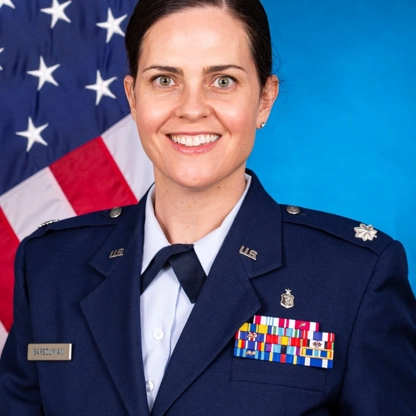
I am the ID Fellowship Program director and I'm mainly interested in teaching clinical reasoning, antimicrobial stewardship, and understanding recruitment to the field of Infectious Diseases. I am fascinated by the challenge of teaching learners how to think and implement what they've learned.
How did you get interested in medical education?
I got interested in medical education as a resident! I enjoyed teaching others and wanted to become a better teacher.
You have been successful in publishing your work in medical education. What advice would you give to others on how to transform your medical education work into scholarship?
Thoughtfulness is always rewarded- if you are building a curriculum, being thoughtful about the steps and the need it fills, and the gaps of the existing curriculum or resources, will inform how you design it. Consider prior to implementation how you will assess your curriculum, which can provide the data necessary for eventually writing up. Curriculum isn't the only thing you can publish within medical education, either. You can work your passion on medical education and teaching through a research project as well, particularly if you think your work can lead to actionable results. Finally, consider working as part of a team, which can help you grow as a medical educator or a medical education researcher, and expand your reach.
What are some of the most rewarding aspects of a career in medical education?
Developing a network of peers and mentors within the medical education community is certainly near the top! It's always cool to find thoughtful and dedicated medical educators and get ideas and develop ideas & energy together!
What are some challenges you’ve encountered as an educator and how have you overcome these challenges?
Curricular time is a common challenge; it often feels like when there is a need to add something to the curriculum something else must be removed. Adding to curricular time is the issue of workload, which impacts the learning environment. During the COVID-19 pandemic, managing curricular time & workload have been difficult and require many changes in real-time. I think my approach has largely been to not be too committed to one particular plan and maybe have to change it when the environment dictates it's necessary, always with the mind of adapting instead of abandoning. With workload, we've had to get creative, and this is a great way for learners to provide input in workflow and other programmatic changes. I am a huge advocate of having the learners provide input into their own workflow, schedule, and time management; this empowerment helped a lot with the uncertainty during the early days of COVID and during various surges, improves morale and learning climate, and frankly helps point out opportunities for innovation that I would not have been otherwise able to see on my own.
Describe your use of simulation to teach stewardship principles to learners.
When trying to teach our learners Antimicrobial Stewardship, I recognized I wanted more than just to give a lecture to our fellows and have them able to get hands-on experience with stewardship. In the military healthcare system, half or more of my graduates will go on to lead Antimicrobial Stewardship programs right after graduation, so getting them able to have practice with stewardship was crucial! But in any institution, on any given day, there may not be enough for a learner to do. So my colleagues and I developed a series of simulations that would involve the fellows solving stewardship challenges as a team with proposed solutions to notional problems. Over the years, we've developed a formal stewardship rotation where each day they have different objectives. The simulations have been modified to fit into this rotation. Our learners develop antibiograms and identify errors in antibiograms, manage a variety of issues that would come up with routine stewardship practice (all notional), perform some chart reviews, appraise our gaps within our institution, and other exercises to get this hands-on/simulated hands on experience to really apply what they've learned.
Tell us about how you have worked to create a diversity, equity, and inclusion curriculum at your institution.
We started with asking the fellows and faculty to define what we wanted out of the curriculum ("to take care of our patients better") and then developed activities directed at that. For example, to take care of our patients better, let's ask them-- what do you wish we knew or what do you want to tell us about your experience in healthcare? This led to patient panel discussions. We also want our learners to really engage with the content, so in addition to getting guest speakers on some key topics, we've asked the fellows to develop 40 minute talks on different DEI topics. The faculty generated a list of content, then the fellow can choose the area to dig in.
What advice do you have for someone who is starting a career in medical education?
I had a lot of impostor syndrome when I started out. I had reservations about identifying as a medical educator, mostly because I started before I had any formal education on Med Ed. Don't waste time with this impostor syndrome! Jump in, and use every opportunity you can to grow within the field. Get feedback on your teaching from trusted colleagues and learners. Take advantage of any faculty development courses that come your way, and if something strikes your interest, start to research a little bit about it on the side. There will be opportunities for formal education that crop up and take them! There are some classic books out there about teaching in medicine or remediation that you should check out-- get a mentor and they will be able to point you in the correct direction! And finally, in addition to a mentor, develop your team of peers to embark on this journey together, whether at your institution or at others.
What other innovative educational program or process are you most excited about currently?
I am excited about so much in Med Ed-- and I'm fascinated about the ACGME's Internal Medicine 2035 strategic planning exercise. While most of my passion for medicine revolves around Infectious Diseases, big picture I am still an internist at heart (or at least in one ventricle or valve), and I'm excited to see the future of the field and residency training.