
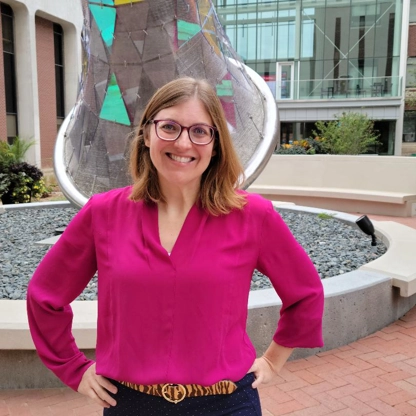
I co-direct the preclinical Microbiology and Infectious Diseases content within the University of Nebraska Medical Center School of Medicine’s preclinical curriculum, including the Blood, Defenses, and Invaders and Multi-organ System blocks. In addition, I am the Infectious Diseases Fellowship Associate Program Director and Director of the Oncology Infectious Diseases program; I get to teach fellows and residents about infections that occur in immunocompromised patients, particularly those with hematologic malignancies and transplant recipients. I also serve as the ID Division’s representative to the Department of Internal Medicine’s Faculty Development and Mentoring Task Force. I have interests in interactive learning modalities and faculty mentoring and development.
Please describe your educational roles and interests.
I first became interested in medical education during my Internal Medicine residency at the University of Florida. Interns and residents on the inpatient services were each responsible for choosing a topic every week to teach the rest of the team. I quickly realized that not only did I find teaching rewarding, but that teaching content was the best way for me to really understand complicated concepts and retain the information long-term. I was able to hone this skillset during my Chief year while attending on the inpatient teaching services and organizing morning reports. I realized that sharing my passion for medicine with junior learners reminded me what I loved about my career!
How have you incorporated an interest in medical education into your career?
I am fortunate to get to work with learners at all different levels, both at the bedside and in the classroom setting. I have a focused interest in immunocompromised patients, and I love talking through differential diagnoses for our most complicated oncology and transplant patients. Working at an academic medical center means I'm constantly learning from my colleagues and trainees.
What are some of the most rewarding aspects of medical education?
Working in medical education is a constant reminder of what a joy and privilege it is to care for patients and to help train the next generation of medical professionals. Teaching a new concept or explaining a complicated process to a student or trainee and engaging in subsequent discussion is among the most rewarding aspects of working in medical education. I enjoy being asked challenging follow-up questions (even if I don’t know the answer) because it shows me that the learners are understanding and thinking deeply about the topic. Then we get to learn the answers together!
In your nomination, it was mentioned that you use multiple learning modalities including interactive lectures, novel gaming, and improvisation in your pre-clinical microbiology and infectious diseases blocks. What can you tell us about that?
Along with my fantastic ID medical educator colleague, Dr. Sara Bares, I have developed a web-based game application for helping to solidify microbiology and clinical ID concepts for course review and USMLE Step 1 preparation. Clues are given with variable difficulty and points are awarded based on the number and level of clues users need to “make the diagnosis.” We are also known to strategically interrupt lectures or small group work with a “patient”—typically faculty member or student—presenting with a chief complaint, and together, the classroom interviews the patient, decides what next tests to order, how to interpret them, and determine a management plan.
What advice do you have for faculty who are looking to incorporate novel learning modalities into their educational initiatives?
Try something new and don’t be afraid to ask for feedback! Students and learners are valuable sources of information regarding what works and what doesn’t. When they see that you are invested in their learning and looking for honest feedback, their input is invaluable. Reach out to other medical educators to discuss ideas and consider a collaborative approach.
You serve on the IDSA Med Ed Community of Practice Mentoring Workgroup. What advice do you have for junior faculty seeking mentorship in medical education?
Utilize the IDSA Med COP resources! Come to the meetings, follow the IDSA Med Ed COP on Twitter, join the discussions, and apply for the Workgroups. There are so many fantastic educators within IDSA; I am starstruck and inspired when we have our annual receptions. I have personally participated in the IDWeek clinician-educator coaching program and found the experience to be incredibly helpful. Having a fresh look at my career goals, current roles, CV, and promotion pathway from a well-established, successful clinician educator has afforded me some new perspectives and invaluable advice. It is also a great way to make connections and get to know some awesome people.
In your work with the IDSA Med Ed Community of Practice Mentoring Workgroup, you have developed a survey for ID clinician-educators. Tell us a little bit about the background and purpose of that survey.
At the Med Ed COP reception at IDWeek 2021, we conducted a survey to help understand the various medical education roles the members of our COP hold and to describe the range of institutional support, including FTE, that is provided for these roles, and whether it is adequate to perform the duties and to allow for innovation. We hope this will provide data for clinician educators and mentors when assessing current commitments and future opportunities. We also hope that it will help identify needs among our COP to direct future projects.
What innovative educational program or process are you most excited about currently?
I am very excited to see the results of the Med Ed COP Faculty Resources and FTE survey. I am also in the middle of our M1 Invaders block and prepping for our M2 Multi-Organ Systems, and I love the opportunity to continue evolve our course and its content. It’s wonderful to be back in the classroom with the students and be able to focus on the actual course content, rather than on reconfiguring activities to be delivered via virtual learning platforms.