
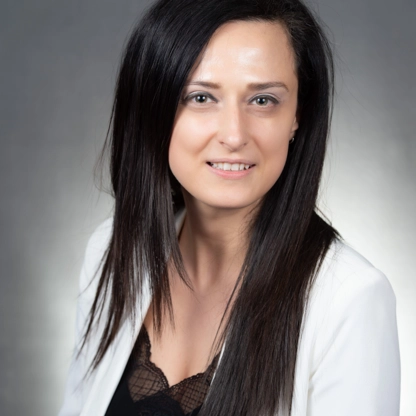
Dr. Caline Mattar serves as the Associate Program Director for their Infectious Diseases Fellowship and as the Director of Global Health Education and Partnerships for the School of Medicine. She started her career with the internal medicine residency program where she served as an APD, leading a Pathway for Global Health and Health Equity.
How did you get interested in medical education?
My mentor in medical school was a phenomenal teacher and role model (and an ID physician). It became clear to me that a part of being a well-rounded physician was to be an effective teacher. I became passionate about Public/Global Health and equity also in my student years and wanted to change how global health was taught to medical students, residents and fellows. I got the opportunity as a junior faculty to lead a small global health program initially and since then continued to grow both my interest and the programs I lead at Wash U.
How have you integrated medical education into your career?
Medical Education currently constitutes more than half of my time as faculty. I started with taking over a small pathway for residents and grew it to where it received a lot of attention and support. Through that, I was able to start more programs, get resources and time to grow those and to develop further as an educator.
How did you transform your interest in medical education into a career?
As mentioned above, I was entrusted with a small program on day 1 as faculty, and was able to grow it and start new programs for other groups of learners (fellows and students), eventually becoming the resource at the school level for anything related to global health education.
What is one medical innovation that makes you the most proud?
Using simulation to teach global health is an innovation that has been extremely well received and highly effective to achieve learning objectives.
How have you transformed your medical education work into scholarship?
I have a fantastic mentor who encouraged me to evaluate my programs, use specific metrics of success and then report on those. I am also grateful to be in an institution where there are many exceptional education scholars who served as a resource.
What are some of the most rewarding aspects of your career as an educator thus far?
Hearing that students or trainees chose to come to Wash U because of one of my programs or hearing from graduates that their participation in training/learning has changed their career trajectory are what makes being an educator extremely rewarding.