
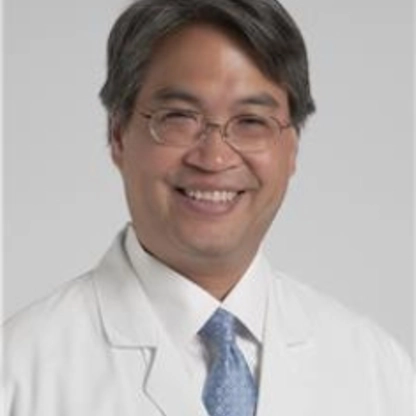
I have served as Fellowship Program Director in ID at the Cleveland Clinic for 25 years (1994- 2019). I have also been an Associate Program Director for the Internal Medicine Residency Program at Cleveland Clinic over most of that time. My main interests in medical education have been in curriculum development, high fidelity simulation, Problem Based Learning (PBL) in graduate medical education, and interdisciplinary curricula where fellows from different specialties rotate together (e.g., ID fellows and rheumatology fellows on the same rotation, 50% clinical/50% didactic).
How did you get interested in medical education?
My mentor in ID, Dr. Martin C. McHenry, was not only a master clinician but a consummate educator. When we first met in the 1980s, I was a medical resident at the Cleveland Clinic, and he was the Chair of ID. At the time, I was planning on a fellowship in Pulmonary and Critical Care. He was such an outstanding clinician and teacher that I immediately did a 180-degree turn and went into ID instead. He was the one who encouraged me to pursue MedEd as a career pathway in and of itself, within the context of being a full-time clinician. I realize now that he was modeling a "clinician-educator" pathway long before it was recognized as such.
How have you integrated medical education into your career?
Integrating MedEd into a busy clinical practice was a challenge during my early years as program director (PD). At that time, the ACGME did not require protected time for PD educational/administrative activities. I was fortunate to have ID chairs who valued MedEd and protected one half-day per week for education and flexible time to attend fellow conferences (at least 1 hour/day). Otherwise, my clinical schedule was the same as other faculty in our department. Over several years, we redesigned many of the fellow rotations to allow for more time for teaching, creating clinical rotations where the services ranged from very busy (inpatient general consults) to several rotations which were more "70/30" or even "50/50"-- 50% clinical, 50% didactic. This system proved very rewarding for both the fellows and the faculty. Even with the busy inpatient service, we developed a "tail model" where the fellow and staff were on service together for two weeks; the first week they took on new consults, and the second-week "tail" they only rounded on patients from the prior week and saw no new consults. This allowed time for an embedded curriculum in the "tail" week and more time to reflect on the patients. In recent years integration of MedEd has been easier because of ACGME requirements for protected time. However, this is an ongoing challenge because the administrative duties of the PD have also increased to fill that time. My goal was to better integrate MedEd into the careers of all of our ID staff, not just the PD and core faculty, and it took some major restructuring in rotations and embedded curricula to accomplish this. In my role as Associate PD for the Internal Medicine Residency Program, I have had additional protected time for educational activities. Many of these activities for the IM residents have mirrored my activities as ID program director, including supervising PBL sessions weekly for IMRP, Journal Club for IMRP, designing a three year curriculum, and establishing embedded curricula for multiple rotations.
How have you transformed your medical education work into scholarship?
I have helped author four peer-reviewed medical education publications on topics including Public Speaking Anxiety in Graduate Medical Education, medical knowledge acquisition when adopting an academic half-day curriculum, curriculum guidelines for transplant ID curriculum, and problem-based learning. I have presented several abstracts on medical simulation at national meetings, including an e-learning curriculum in medical microbiology using DecisionSim software. In addition, I have run several interactive workshops on Problem Based Learning for residents/fellows. Currently, I am working under a grant to develop virtual reality simulations in ID.
You have been a longstanding director of a fellowship training program and introduced concepts of problem-based learning before this was common. Tell usa bout this process.
I have helped author four peer-reviewed medical education publications on topics including Public Speaking Anxiety in Graduate Medical Education, medical knowledge acquisition when adopting an academic half-day curriculum, curriculum guidelines for transplant ID curriculum, and problem-based learning. I have presented several abstracts on medical simulation at national meetings, including an e-learning curriculum in medical microbiology using DecisionSim software. In addition, I have run several interactive workshops on Problem Based Learning for residents/fellows. Currently, I am working under a grant to develop virtual reality simulations in ID.
Many of the changes in our training program have been initiated by our fellows, and a PBL based curriculum is one of them. Our curriculum for many years was mainly didactic lectures or small group reviews of textbook chapters (the "Mandell Club"). It became apparent that the fellows had difficulty absorbing and retaining most of the textbook material unless they had a related patient. PBL was widely used in undergraduate medical education, but to our knowledge, there were no reports of PBL-based curricula at a fellowship level. We started using a few unknown cases during the didactic hours to supplement the material, and the improvement was immediate. The fellows were instrumental in pushing this forward, using past cases presented at our weekly ID Case conference for practice. We had a ready supply of ~ 100 unknown cases/year from this one conference alone. Over several years, we identified internal cases from Cleveland Clinic with high teaching value and cases from the literature and integrated them into appropriate sections of the curriculum. The course content was delivered using the MOODLE platform, a web-based, open-source learning management software. The system was free, provided automated grading and graphing of responses, and had easy access from home. We used a flipped classroom schedule. Fellows were assigned 2 cases/week over two years, with cases presented as diagnostic unknowns. Cases were grouped into subject blocks (e.g., neurologic infections, GI infections) for 2-3 months at a time. Fellows would work on each case for 30-45 minutes, open book, simulating a typical patient encounter. Answers were submitted in a standardized short-essay format of 1-2 paragraphs. For each case, the fellow was asked to list the "top 3" differential diagnoses, outline the pros and cons of each diagnosis, and choose the single best one. We then met face to face for the two one-hour sessions per week to discuss the cases and reveal the "answers." We developed a simple scoring system based on this. We were able to demonstrate that fellows improved their diagnostic accuracy from year 1 to year 2. We used this as formative feedback. We have also used PBLs as part of the embedded curriculum for subspecialty and elective rotations, including neuro-infectious disease, ICU, endocarditis rotation, granuloma clinic (outpatient), HIV clinic, immunodeficiency clinic, microbiology laboratory rotation, and others.
In your nomination, it was mentioned that you are interested in artificial intelligence strategies in medical education. What can you tell us about this?
My interest in artificial intelligence (AI) is in its application for medical simulation. I strongly believe that the most effective curriculum is the patient. Short of this, a high fidelity simulation may be the next best thing (although this remains to be seen!). We have been developing a computer-based avatar of a patient who may respond to simple questions and give appropriate answers, such as responses to a review of systems. This would mimic a telemedicine encounter, although we are looking at a variety of other formats. This requires accurate voice recognition and then some AI processing for answers. This is still a ways off, but the voice recognition/response field is expanding rapidly.
What advice do you have for those who would like to pursue a career in medical education?
This is the time to do it! The environment for a medical educator is so much better than before. The role of clinician-educator is well acknowledged now as a respected career pathway. There is support at the ACGME level for PDs and APDs like never before, and in many places, core faculty are also recognized and respected for teaching activities. If you have the opportunity to receive formal training in education, such as a Master's degree in education, this will be well worth it. I believe the PDs of the future will be those with formal training in education. Also, there is much research to be done in medical education, and the field is wide open.
What other innovative educational program or process are you excited about currently?
On a personal level, I am most excited about medical simulation. This field has been mainly limited to simulation of procedures (ACLS, bronchoscopies, surgery, breast examinations). There has been very little in cognitive simulations, such as the patients we see every day in ID. I am trying to convert our PBLs to a simulation format and then compare them for medical knowledge acquisition and medical decision-making. We are developing an online course in neuro-ID that incorporates PBLs, simulations, and practice in MRI interpretation targeted for ID fellows. We hope to share this across all interested ID training programs and formally study the educational impact.