
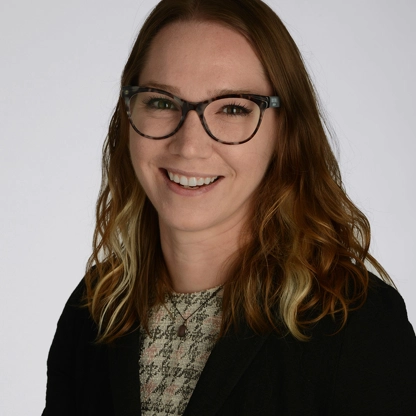
Dr. Chelsea Gorsline is an Assistant Professor of Infectious Diseases at the University of Kansas Medical Center (KUMC). Her clinical interests are immunocompromised patients such as those with malignant hematological conditions and recipients of stem cell and solid organ transplants. She is an Assistant Director in the Antimicrobial Stewardship Program, with a focus on the implementation of stewardship initiatives for immunocompromised patients. She is also the Director of the Transplant Infectious Diseases Pathway for the KUMC Infectious Diseases Fellowship Program and conducts clinical research in solid organ transplant and malignant hematology patient populations.
How did you get interested in medical education?
I really enjoyed the camaraderie that came with working in academic medicine during my medical training and through that, I knew that I wanted my career to be in academic medicine. The pandemic hit during my first year of ID fellowship and out of the loneliness and boredom that came with this, I founded the Transplant ID Fellows Network to connect with others with similar interests. In the beginning, it was focused on networking but as I graduated from transplant ID fellowship in 2022 and transitioned to early career academic medicine, I recruited other women in transplant ID, Courtney Harris and Rebecca Kumar, to revamp it. Together we rebranded to the Transplant ID Early Career Network (TxID ECN) to encompass networking, medical education and career advice/mentorship.
How have you integrated medical education into your career?
In 2022 around the time I joined faculty at KUMC, I realized the goals of TxID ECN overlapped with my professional career. My involvement in this project has opened a host of new opportunities, including a standing partnership with the Transplant ID Journal wherein we publish findings from our #TxIDChats (conducted on X, formerly known as Twitter) on a wide range of topics relevant to transplant ID with the TxID ECN as invited manuscripts. Through these #TxIDChats I’ve met numerous other physicians in transplant ID and subsequently joined national organization subcommittees focused on my other passion, antimicrobial stewardship in transplant ID.
How did you transform your interest in medical education into a career?
I never considered myself a traditional medical educator, but it was those around me who noticed my natural ability to mentor and opened important opportunities to me. Through the support of my colleague Jessica Newman, I’ve become Director of the Transplant ID Fellowship Pathway at KUMC and from the help of former colleague Nate Bahr, I am now the Faculty Director of the FitzSimmons Infectious Diseases Scholars for medical students at KUMC. It was also through my partnership with Courtney Harris and Rebecca Kumar that we expanded the scope of TxID ECN, and spurred the creation of a digital/social media section on my CV to help with promotion when the time comes.
What is one medical innovation that makes you the most proud?
The development of a robust handshake antimicrobial stewardship program with my hematology and stem cell transplant colleagues at KUMC. This has not only improved the quality of patient care, decreased inappropriate antibiotic use, but has also strengthened the working relationship between ID, antimicrobial stewardship and hematology. It has also set the stage for implementation of new projects like antibiotic allergy delabeling, antiviral and diagnostic stewardship. It is a labor of love but so rewarding!
How have you transformed your medical education work into scholarship?
The standing partnership between TxID ECN and the Transplant ID Journal had led to 6 publications where we share knowledge learned from our #TxIDChats, and additional insight from invited expert co-authors, as a recurring Experience from the Field series. We have plans for at least another 6 #TxIDChats and associated publications over the coming year. In addition, I’ve been invited to speak at an international transplant conference about the use of social media in transplant ID and have been invited to work on other manuscripts as an expert co-author in antimicrobial stewardship in transplant ID.
What are some of the most rewarding aspects of your career as an educator thus far?
Mentoring medical students who have an interest in infectious diseases brings me the most joy. As we are facing declining numbers of applicants into infectious diseases fellowship training programs, I believe the most important opportunity we have is to identify those with an interest in infectious diseases early. We can then shepherd them towards a career in our field while also reminding ourselves why we joined this profession.