
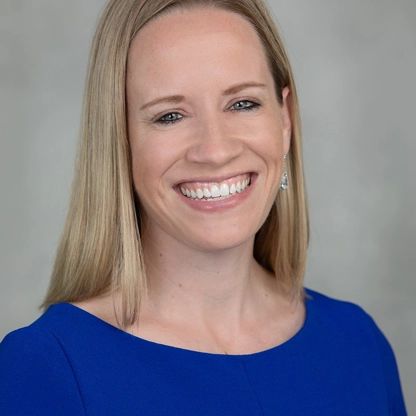
I currently serve as the Program Director for the ID Fellowship at the University of California, San Diego. Prior to becoming PD, I was the Associate Program Director for four years. I direct the Clinical Foundations Course for first and second-year medical students at UCSD SOM which teaches clinical skills (history-taking, physical exam, communication skills, and clinical reasoning) and problem-based learning. I am a proud member of IDSA’s Med Ed COP and am part of the Teaching and Learning Resources workgroup. I also serve as an exam committee member for ABIM’s ID Board Certification and Recertification exams.
How did you get interested in medical education?
My passion for teaching stems from my mom, Wendy Wooten. She is a high school science teacher (Biology, Physics, Chemistry, Biomedical Sciences, Robotics, and more!) and instilled in me a love for learning and teaching. I spent a year between undergrad and medical school teaching and directing a course in Human Biology at Stanford University. This experience solidified my decision to pursue medical school training in a lecture-free program (the UCSF-UC Berkeley Joint Medical Program) which utilizes a 100% problem-based learning curriculum where students teach each other medicine. Throughout the remainder of my training and into my early career, I have continued to love teaching and mentoring learners. More recently, I have expanded my skillset to be able to develop and implement curricula and have begun pursuing medical education scholarship. Nothing brings me more joy than when a trainee has an “aha moment” in their understanding of a difficult concept or when they go on to achieve their career goals and dreams.
How have you integrated medical education into your career?
When I first started out, I did a lot of direct teaching. I worked with residents and ID fellows on the ID consult service and in clinic. I served as a small group PBL facilitator for first and second-year medical students, and participated in the ambulatory care apprenticeship program, working with 1-2 medical students every other week throughout the year. I volunteered to revamp and coordinate the ID fellow core didactic lecture series and assisted the Internal Medicine residency program with developing their ID block didactics. In HIV primary care clinic, I identified a need to develop a competency-based curriculum for the different levels of learners (medical students, residents, and ID fellows) who rotate with us. This was my first substantial experience with curriculum development. Even though many of these positions and projects were not funded, they brought me tremendous joy and job satisfaction. Additionally, because I loved what I was doing and because it was so important to me, I pushed myself to do my absolute best possible work. Over time, I was recognized for these accomplishments, and this opened opportunities for more substantial and funded positions in medical education including the APD and subsequent PD roles, Director of Education at our HIV Clinic, and course director for the Clinical Foundations Course in the SOM.
Describe the ID coaching program for 3rd year medical students that you developed as UCSD.
The ID coaching project was born out of a curriculum development process using the Kern Model. We wanted to incorporate earlier clinical learners into the inpatient ID consult service however faculty, fellows, and clerkship directors were concerned about having such early clinical learners on a complicated and busy inpatient service. Based on data showing the benefit of coaching, feedback, and deliberate practice, we developed the idea of having an ID coach (either an off-service ID fellow or ID faculty) meet with third-year medical students on the rotation once a week for 1-2 hours. We hypothesized that this would benefit students because they would have dedicated, medical student-level teaching in a psychologically safe environment (since ID coaches did not have a role in formally evaluating medical students). We also hypothesized that this would benefit ID fellows and faculty on service by 1) taking pressure off of them to constantly be teaching the students, 2) provide fellows with opportunity to practice their teaching skills, and 3) improve well-being and job satisfaction by creating more of a team environment akin to the team structures that are commonly seen in Internal Medicine residency programs. The ID coaching program was overall successful and highly rated by learners and educators alike.
Tell us about the HIV primary care curriculum for 3rd year medical students that you developed to improve sexual history taking skills and management of sexually transmitted infections.
While we know that not all trainees will enter a career in ID or HIV Medicine, a clinical rotation in an HIV Clinic is highly valuable because there are opportunities to teach fundamental skills that are important to all practicing physicians. For example, teaching trainees how to take a trauma-informed, culturally-competent sexual history or having them counsel patients on the concept that undetectable equals untransmittable has the potential to improve patients’ trust of healthcare providers and decrease stigma among marginalized patient populations. To this end, we created a self-directed curriculum focusing on HIV primary care basics, STI diagnosis and treatment, and communications skills around sensitive topics such as obtaining a sexual history and counseling patients about STI transmission risk. The curriculum also included videos demonstrating best (and less ideal) practices in these communication skills and a checklist of skills for learners to practice and receive feedback on from their supervising faculty. An evaluation of this curriculum demonstrated improvement in fund of knowledge and self-perceived confidence in these communication skills.
In what ways has your approach to medical education changed or adapted during the COVID pandemic?
The COVID-19 pandemic has significantly impacted medical education. In particular, teaching clinical skills to first and second-year medical students proved to be a particular challenge when our course had to be 100% virtual. For these small group sessions conducted over Zoom, we pivoted our content to focus on clinical reasoning (e.g., “what would you be looking for on physical exam in a patient presenting like this”) and deemphasized teaching on the mechanics of the physical exam (which is very hard to do virtually). When we were allowed to conduct some sessions in-person, we used more simulation compared to what we had used in the past (e.g., having students listen to heart murmur and lung sound audio simulations instead of listening to and examining patients with these physical exam findings). Similarly, we were able to still incorporate standardized and real patients into our teaching using Zoom however these experiences focused primarily on history-taking and not the physical exam. In the fellowship, our educational approaches did not change that much since rounds and bedside teaching were still done in-person. Conferences and didactics remain virtual to date. The benefit of virtual cases conference and other didactics is that the turnout is much higher than previous however the degree of engagement is variable.
What are some of the most rewarding aspects of a career in medical education?
The most rewarding aspect of a career in medical education is knowing that your impact on patient care is much much wider as an educator than it ever will be as a clinician. Seeing my trainees and mentees go on to achieve their career goals and individual success is the one of the most gratifying aspects of my job.
Explain the impact of incorporating a gamification education tool into your fellowship program?
Even before the pandemic, our ID fellow core didactics were conducted via Zoom because our fellows are spread across three different hospitals. We noticed that fellows were not particularly engaged with the core didactic lecturers. We created a flipped classroom gamification tool to enhance fellows’ engagement and learning during their core didactics. Two days prior to the lecture, 2-3 board-style multiple choice questions are sent out to the fellows using an electronic survey. The first fellow to correctly answer the questions earns points. The fellow with the most points at the end of the year wins an award. Fellows reported that this friendly competition motivated them to read up on the topic before the lecture and kept them more engaged during the lecture (so that they could see if they got the correct answer or not). Fellows also reported that this strategy helped them feel more prepared for ID boards and, although not necessarily causative, we saw an increase in ITE scores after we started using this strategy compared to before.
What other innovative educational program or process are you excited about currently?
TLR workgroup to develop a peer review process for ID educators to submit ID chalk talks and teaching scripts. These resources would then be available for all ID educators to incorporate into their clinical teaching. Last year I created a course in Medical Education for Internal Medicine subspecialty fellows at UCSD. This year we have expanded the course to include fellows from across all GME surgical and non-surgical fellowship training programs. Finally, I am working with colleagues in Transplant ID to evaluate a multicenter projected entitled “Donor Call” which is an ID simulation activity in which fellows get practice thinking through and deciding on whether to accept or reject organs for transplantation based on risk of infection.