
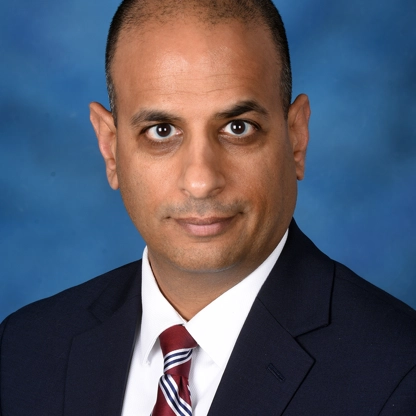
I am the Assistant Dean for the Pre-Clerkship Curriculum for our undergraduate medical school curriculum and the Embedded Content Lead for all Infectious Diseases taught in the curriculum. I am also the Service Chief for MED ID which is our hospitalist service for patients admitted with HIV infection or other complex infections. In the ID Division, I am the Director of Medical Education and previously served as Associate Program Director for the ID Fellowship.
How did you get interested in medical education?
As a trainee, I always gravitated toward GME and was excited by opportunities to combine my interest in Global Health and Medical Education. During ID fellowship, I was able to explore opportunities to build medical education programs in Malawi and Zambia, and I realized the significant impact of these programs in creating sustainable improvements in health outcomes. After joining the ID faculty at Maryland, I moved to Zambia to help develop an HIV/ID residency program for trainees at the University Teaching Hospital in Lusaka, Zambia. I am proud to say that this 1-year program we started in 2009 has now grown into a 5-year training program combining Internal Medicine and Infectious Diseases. The success of this program allowed us to work with CDC to create a similar program in Haiti to develop leaders in HIV medicine within the country.
How have you integrated medical education into your career?
As I transitioned towards working full-time at Maryland, I had an opportunity to get involved in UME, assisting in our Host Defenses and Infectious Diseases (HDID) course. This was my first real experience in UME, and I was surprised by how much I enjoyed working with early learners. Over time, I became the Course Director for HDID, leading to subsequent opportunities for leadership positions in UME.
How did you transform your interest in medical education into a career?
As a course director, I was very involved in a major overhaul of our Pre-Clerkship Curriculum, leading to a new position being created within the Office of Medical Education to oversee the entirety of our Pre-Clerkship Curriculum. In this role, I'm able to interact with early learners and also have an impact on how we deliver educational content to our medical students.
Your nomination mentioned that you run the inpatient HIV/ID medical teaching service at your hospital. What can you tell us about that?
The MED ID service is an admitting service staffed by ID attendings, so we are the primary team for these patients. Originally intended for patients with HIV infection, it has now expanded to a service with complex infections, often at the intersection of substance use disorder and ID. We work with a team of residents, interns, students, and ID fellows. All categorical interns are required to do this service; many residents return in their 2nd and 3rd years. The attendings of this service are our top clinician-educators and create an educational experience that is repeatedly singled out by the residents as being their favorite block for education. At a time when we often struggle to get residents interested in ID fellowship, we have had 25 residents choose careers in ID over the past 10 years, which, at least in some part, is due to their experience on MED ID.
What are some favorite ways to teach ID to learners at multiple levels?
It is really important to make teaching relevant to the level of the learner, which can sometimes be difficult when the team ranges from 3rd-year students to fellows. I like to ask the learners what is it that they want to learn and tailor the learning activity based on their interests. I do a lot of whiteboard teaching when I'm on service, but I think the best learning occurs organically on rounds as we discuss patients. Every patient we see provides an opportunity to teach something that is relevant for every level of the learner. Sometimes we just have to work a little harder to bring out those teaching points.
What other innovative educational program or process are you most excited about currently?
We recently reorganized our entire curriculum and a large part of that is increasing our emphasis on active learning. I have had the opportunity to learn so much from the members of this community and I try to bring back these ideas to my own group at Maryland. I encourage all of our course directors to find innovative ways to teach content. We test these ideas out in our courses - simulation activities, TBL, gamification, small group projects, and anything that will engage the students. It's all on the table; we want to see what our faculty can come up with and then see how the students respond to these different teaching innovations. One of our ID Interest Group students recently started a weekly microbe quiz based on Pokemon cards that has generated tremendous interest from his classmates. It's something I never would have thought of, yet he probably gets more engagement from this than we do with so many of our more traditional teaching activities.