
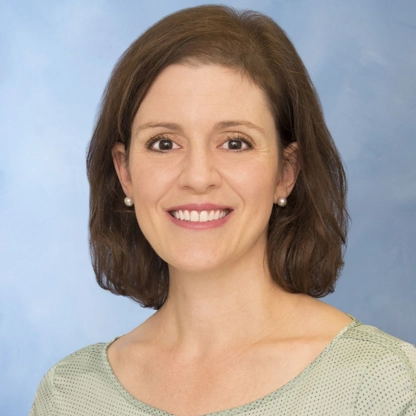
Emily Abdoler is co-director of the Infectious Diseases & Microbiology course at the University of Michigan Medical School, co-director of the Academy of Medical Educators, and co-lead of the Active Learning initiative within the preclinical curriculum. She currently serves on the Education Committee for the Infectious Diseases Society of America (IDSA) and the Teaching and Learning Resource working group for the IDSA Medical Education Community of Practice. She recently was a member of the Infectious Diseases Milestones Working Group for the Accreditation Council for Graduate Medical Education (ACGME). Her research interests lie in metacognition - specifically clinical reasoning and reflective practice - and she is engaged in qualitative and mix-methods research projects at the intersection of these areas and Infectious Diseases. She is also involved in curriculum design and educational program evaluation within Infectious Diseases. She is interested in understanding and promoting medical education careers and research within the medical subspecialties.
How did you get interested in medical education?
I come from a family of educators; my mother and two of my aunts were public school teachers, and I spent my formative years inspired by their dedication and the direct positive effect they had on the lives of learners. In college, I started volunteering as an afterschool science teacher for K12 students as a way to apply my growing knowledge in the service of others immediately; I quickly recognized how teaching augmented my learning and reignited my enthusiasm for the topics I taught. This activity helped lead me to a career in academic medicine, seeing it as a perfect marriage of education and biomedical science. In this way, an interest in education predated my interest in medicine and has been a strand that I have pulled through my career from the first day of medical school.
What opportunities have you sought out as a medical educator to further develop your skills?
I have been fortunate to have mentors and sponsors throughout my career that have allowed me to explore all five realms of medical education: teaching, mentorship/advising, learner assessment, curriculum design, and educational leadership. I was able to receive formal instruction in these areas while also experientially learning through engagement in the work of medical education. This broad exposure helped me define my specific medical education interests and strengths. My trajectory was also heavily influenced by participating in the clinician-educator pathway through ID fellowship at the University of California, San Francisco (UCSF), which allowed for a curated training experience designed to build expertise in both ID and medical education. They supported my completion of a master's in education focused on qualitative research methodologies and educational theory and medical education skills, and I gained further mentored research experience through the San Francisco VA Health Professions Education Evaluation and Research Fellowship. Now that I am in a faculty role, I derive the most benefit from engaging with various medical education communities of practice. My participation in the IDSA Medical Education Community of Practice has been particularly valuable, allowing me to learn from and partner with ID educators at other institutions whom I consider role models. Locally, my engagement with the University of Michigan Academy of Medical Educators gave me an instantaneous educational home as I started my faculty career.
How have you incorporated an interest in medical education into your career?
I think my career has been augmented by engaging in medical education at various levels. I am very grateful to the University of Michigan for giving me multiple formal medical education roles from the outset of my faculty appointment. I love having the ability to directly engage in teaching by co-directing the ID/Microbiology course while also impacting undergraduate medical education more broadly through my work on the Active Learning initiative. Conversely, my role co-directing the Academy of Medical Educators allows me to contribute to the diverse community of educators at Michigan Medicine and think more deeply about the issues affecting medical education across our institution. Finally, I have been energized by seeking out opportunities for engagement in education at a national level, both within ID and also with various groups thinking about clinical reasoning. Diversifying my medical education activities helps me engage more actively in a broad community of practice and inspires me to innovate more creatively through the cross-pollination of ideas.
How have you transformed your medical education work into scholarship?
I try to live the mantra of "making it count twice" in terms of my educational efforts, especially as an early-career academic physician with a young family. Most often, this requires thinking about curricular and programmatic innovations in advance to ensure they are grounded in robust needs assessments and are designed to allow for short- and longer-term evaluation. While these efforts require an investment of time initially, they help ensure my efforts are meeting educational needs and allow for the possibility of publication and dissemination. It is also my goal to incorporate clinical reasoning and reflective practice into my everyday clinical work and teaching, so asking questions that help illuminate the metacognitive processes of clinicians furthers my research agenda while improving my own clinical and educational practice.
What are some ways you have incorporated teaching about clinical reasoning into your educational initiatives?
I am a firm believer that students should start engaging in clinical reasoning from the very beginning of medical school – they need to learn how to think as they build their foundational knowledge. Although I consider my efforts to be in their early stages, I have tried to bring this principle into my undergraduate medical teaching. I have incorporated a session on clinical reasoning at the beginning of the ID/Micro course I co-direct. I also provide students with tools and frameworks to help organize their knowledge throughout the course. My goal is to move the focus away from memorizing large tables of "bugs and drugs.". Instead, I help students build and organize their knowledge deliberately and in a way that supports their growing understanding of the complexities of management reasoning and clinical decision-making.
What are some ideas or tips for ID educators looking to teach learners about clinical reasoning?
As someone deeply interested in metacognition, I think that the single most important thing an ID educator can do to teach learners about clinical reasoning is to clearly and concisely “think aloud,” sharing their thought process, reasoning, and areas of uncertainty with learners in a way that is tailored to the learner’s level of training. Conversely, asking a learner to explain their thinking provides an avenue to explore knowledge gaps and identify potential cognitive biases. It also allows them to "show their work"; the answer might be incorrect, but there is usually a strong strand of correct logic that underlies their thinking and can be a very positive base on which to correct gaps in understanding or reasoning.
You have done some interesting work in the study of therapeutic reasoning. Can you briefly describe that?
Within clinical reasoning, a great deal of research has been undertaken in the realm of diagnostic reasoning. Therapeutic reasoning (or, more broadly speaking, management reasoning) has been largely neglected. My colleagues and I interviewed Internal Medicine and ID physicians to explore how they made decisions about antimicrobial selection in relatively straightforward cases. This work (doi: 10.1097/ACM.0000000000003498) illuminated a model of the underlying cognitive process and identified clinical and contextual factors impacting it. It also provided evidence of the existence of therapy “scripts” – all of the information a clinician knows about a given drug independent of the case at hand. We are now replicating this study in other groups and settings, hoping to broaden our understanding of the complexities involved in choosing antimicrobials and other drugs. Ultimately, my goal is to use this information to transform clinical education and improve patient care.
What innovative educational program or process are you most excited about currently?
The move to make USMLE Step 1 pass/fail offers enormous opportunities to rethink how medical education should be delivered and how medical knowledge and skills should be assessed to better align with improved patient outcomes rather than multiple-choice tests. Concurrently, work that has been done to show the bias inherent in medical school assessments is deeply troubling but serves as a strong call to action; we must find more logical, equitable, and fair modes of assessment.