
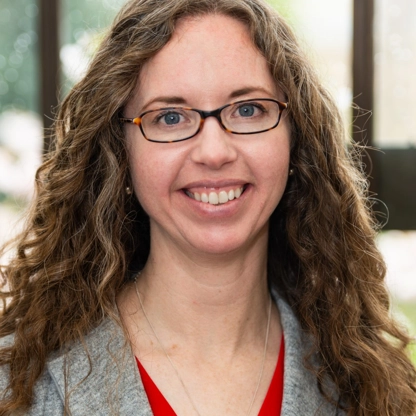
In Undergraduate Medical Education, I am the Prematriculation Block Director and Thread Director for Microbiology & Immunology. In Graduate Medical Education, I am the Program Director for the Infectious Diseases Fellowship Program and in CME/Professional Development, I am the Co-Director of the Education Scholars Program.
How did you get interested in medical education?
I think like many of us, it was a faculty member and for me, it was our medical school Dean. Dr. Stephen Ray Mitchell set the tone for the learning environment. He was fun, kind, and cared about the students as individuals. It was clear that he thought deeply about the curriculum and students, which made our experience so meaningful.
How have you integrated medical education into your career?
Each step of training, I gained a bit more insight into what a career in medical education might look like for me and tried on a few hats. Big moves started with taking on an assistant chief role in residency followed by staying on another year as chief resident where I learned about curricular development and many of the administrative roles in MedEd. In ID fellowship, I focused my scholarly work on medical education by conducting a national cross sectional needs assessment of the IM resident ID curriculum and transforming noon conference into a flipped-classroom, Team-based learning format. Following ID fellowship, I completed a second fellowship in General Medicine focused on Medical Education scholarship where I also attained my Masters in Clinical Research. Once faculty, I sought out roles and directorships where I could put my MedEd skills to work.
As Thread Director for Microbiology & immunology at OHSU, you have redesigned the curriculum using conceptual frameworks such as spaced practice and cognitivism. Can you tell us more about that?
Moving from traditional content blocks to organ system blocks in our UME curriculum was a big lift but also created an opportunity to apply frameworks such as spaced practice for “threads” like microbiology which apply to all organ systems. In this curriculum, we use spiral icons and organize content based on “I”, introductory material, “R” reinforcing material, and “M” mastery material. For instance, I may introduce Staphylococcus aureus in the first block but then reinforce this content in the Skin, Bone, and Muscle block when we talk about cellulitis and then again in the cardiac block with endocarditis. As for integrating the framework of cognitivism, we can see this in every session. The fundamental idea is to help the learner make sense and meaning of the content which should lead to improved long-term retention. To do this, we create concept maps (advanced organizers), use active learning strategies, and remain mindful of key concepts such as “prime-time” and “down-time” to help the learner create mental schemas and connections with the material. We try to minimize rote memorization as much as possible.
You have recently integrated team-based learning into the IM residency program’s ID curriculum at OHSU. Tell us more about that curriculum.
After conducting our targeted needs assessment, we identified key concepts that should be taught to IM residents. Wanting to move away from passive didactics, we conducted an intervention using TBL as the educational strategy. We selected about 8 sessions and recruited faculty willing to learn and deliver a new talk using a TBL format, which is very specific in its design. I served as the TBL coach and co-facilitator. Residents were provided pre-work and asked to submit an individual readiness assurance test (iRAT) online prior to the session. Residents arrived and were grouped by firms and completed the rest of the TBL steps in session. The results of the study were overwhelmingly positive and because of this, our ID teaching of the residents has since remained a TBL format –though COVID did require some adjustments recently.
You have been successful in publishing your work in medical education; what advice would you give to others on how to transform your medical education work into scholarship?
The key is mentorship, or better yet, sponsorship. Producing scholarly work in education can be challenging especially given the difficulty in securing funding. Just as in other research, mentorship is key to help turn an idea into a successful project and career. I am very much indebted to my sponsors both within and outside of OHSU (h/t Dr. Betsy Haney, Dr. Patty Carney, Dr. Wendy Armstrong, Dr. Brian Schwartz). I would recommend finding medical educators, who may not be in one’s division or department (or even institution), who can serve as a mentor to help move you forward. IDSA’s Medical Education Community of Practice is full of wonderful mentors and sponsors who are ready and willing to help!
What advice do you have for someone who is starting a career in medical education?
Meet with other medical educators to get a sense of the scope of this career. There are many avenues available but the key is finding the one that brings you joy and satisfaction. Next would be building a team of sponsors to set you up for success.
You currently chair the IDSA Med Ed Community of Practice Executive Committee. What are some ways IDSA has been helpful to you as an ID educator?
Since starting as an ID fellow, IDSA has been a part of my identity. I worked closely with staff on my research projects during fellowship and at one of my first IDWeek meetings, I met the incomparable Dr. Wendy Armstrong, who has been a key collaborator on multiple MedEd projects/initiatives. Not only has IDSA has been a wonderful resource of talent from staff and members alike, it has become part of my community. Additionally, IDSA has supported key initiatives focused on ID recruitment, Women in ID, and the growth of the CoP which has been invaluable to me as an ID educator.
What other innovative educational program or process are you excited about currently?
I am, of course, very excited about the innovations coming out of the CoP workgroups! I’ll let them announce their amazing initiatives, though. Otherwise, I’m really excited about another project I am working on with our IM residency QI director where we are qualitatively analyzing data from their WISC (Wellness and Improvement Science) program. I love that in medical education I get to collaborate with different specialties, applying the central skills in MedEd scholarship and learning about different aspects of trainee experiences. MedEd is awesome!