
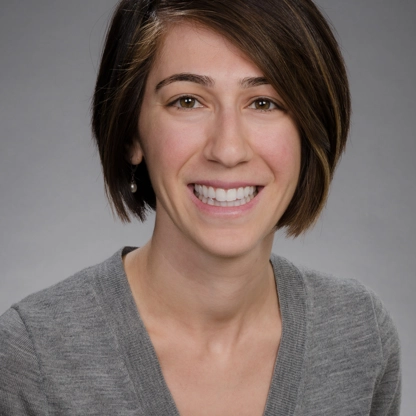
Jehan Budak is an Associate Editor for the National HIV Curriculum. In addition to serving as Assistant Medical Director for the Madison Clinic (the HIV clinic at Harborview), she is the HIV Pathway Director for the Internal Medicine Residency, the site director for the Clinical ID and the Clinical HIV clerkship electives, and the co-director of a pre-clinical medical school elective about the clinical management of HIV. She also serves on the IDSA Medical Education Community of Practice ID Week Working Group.
How did you get interested in medical education?
I think my interest in education comes as the result of growing up as the daughter of two high school teachers, as throughout my life I’ve gravitated toward educational roles. Between college and med school, I tutored student-athletes and was a substitute high school teacher. In med school, I tutored pre-clinical students, and it was when I was applying to residency that I realized I’d like education to be part of my career. During residency at UW, I was in the Clinician-Educator Pathway and HIV Pathway, and then did an Ambulatory Chief Residency. I was able to grow these interests in clin ed and HIV during ID fellowship at UCSF in the Clinician-Educator track and took part in the Harvard Macy Institute Program for Post-Graduate Trainees. Now, I’m pursuing a Master in Health Professions Education through the University of Illinois at Chicago.
How have you integrated medical education into your career?
I feel fortunate to be able to have medical education be such a big part of my job. I receive dedicated funding from the National HIV Curriculum, the Internal Medicine Residency for the HIV pathway, and in addition to the above roles, I work for the UW STD Prevention Training Center, where I lecture throughout the Pacific Northwest regarding sexually transmitted infections.
How did you transform your interest in medical education into a career?
I think one thing I did was that I made my interests known, specifically how I love thinking about how to teach people about HIV care. I think it is always worth letting people know the things you are passionate about. Sometimes opportunities come up and people suggest your name for opportunities because they know you are interested in them. It also is important to talk about ideal jobs or dream jobs – even if they don’t exist, it is worth sharing what you envision a “unicorn” job to be.
How have you transformed your medical education work into scholarship?
I think mentorship is crucial. There is so much to academic medicine that is part of the “hidden curriculum,” so having mentors guide you through that is invaluable. Another key aspect is to identify things you are passionate about. For me, that is residency HIV pathways and their impact. For example, I started with some small scholarship regarding that, a poster here and there, which then turned into a brief report. Then in fellowship I shared that I wanted to identify and describe all the HIV pathways in the US and was very much supported by my mentors in this. I then realized that I like thinking about educational scholarship, so one of the reasons I pursued the MHPE is so that I can pursue this in a more independent and rigorous fashion. Last, good ideas can require creativity and spending a lot of time thinking about a problem. Over the last several years I’ve worked on cultivating this creativity, through reading more, going to conferences (like IDWeek and educational conferences), listening to people talk about things that excite me, and brainstorming ideas with peer mentors. I recognize this requires time and space, often away from work, which is admittedly hard to come by.
Tell us about some of the new initiatives you have taken to improve education in HIV care and STD management
I get to work with some outstanding individuals on the National HIV Curriculum and at the STD Prevention Center, and we strive to think of ways in which we can convey content in different and novel fashions. Locally, I started an HIV didactic series for the ID fellows and pathway residents and am continually trying to improve their experience in clinic by adding more and different topics, different clinical experiences, and assessments of their progress, both to improve their experience and to identify areas for curricular improvement.
Currently, I’m working with a small group of wonderful individuals to create an HIV pathway community of practice to help support existing pathways and mentor nascent ones. For my MHPE thesis, I’m looking to create a consensus derived checklist for learners on taking a sexual history.
As a fellow you made some wonderful changes to your help your program decrease burnout and you published these efforts. Can you share with us this process of identifying these drivers and how you initiated change? Have their been any follow ups from from your original efforts?
That was a fun undertaking! My fellowship program director (Brian Schwartz) felt this was a need and suggested I, along with a faculty co-chair, co-chair the Well-Being Committee (which we affectionately called the WBC). The fellowship instituted programmatic changes to reduce workload and add education in well-being, and the WBC focused on strategies to enhance resilience and build community. One thing we identified was that the senior years in fellowship were slightly isolating, so bringing people together (twice yearly with a guest faculty facilitator to both advise and collect feedback to bring to the fellowship) with a dinner series was very helpful in peer mentorship. Depending on one’s job, the senior years in fellowship often more similarly mirror one’s career, and it is important to establish balanced habits early on (she says as she still struggles with this!).
What are some of the most rewarding aspects of your career as an educator thus far?
I’ve been fortunate to work with and learn from incredible mentors and clinicians, whether they be my pathway directors, fellowship directors, clinical mentors, peer mentors, bosses, and official and unofficial mentors and sponsors near and far – it truly takes a village. And I think working to create that village, especially early in your career, is worth doing. As for the most rewarding aspects of my career as an educator thus far - I love being part of someone else’s village and helping shape the HIV and ID workforce through that. Paying it forward is 100% the best part.