
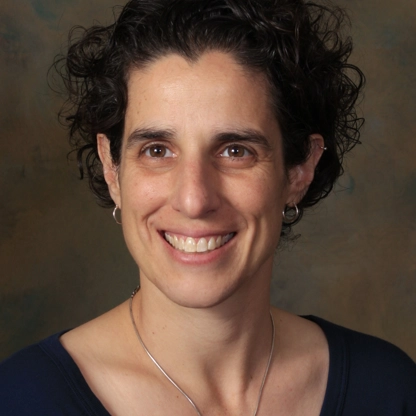
Jennifer Babik, MD, PhD is the Program Director for ID Fellowship at UCSF. Before that, she was previously an Associate Program Director in the ID Fellowship and also in the Internal Medicine Residency at UCSF. Her primary interests in medical educational are working to optimize the educational environment for their ID fellows, developing best practices for effective teaching by consultants, curriculum development in subspecialty education, and gender and racial/ethnic diversity in the internal medicine subspecialites. She also gives lectures on clinical ID for students, residents and fellows in their residency and fellowship core lecture series. She is also the Mentoring Facilitator for junior faculty in the ID Division at UCSF Health.
How did you get interested in medical education?
I first became interested in clinical teaching while a medical resident at UCSF. I had many amazing role models for clinical teachers in the attendings, chief residents, and co-residents that I worked with during that time. I was then fortunate to be a chief resident at San Francisco General Hospital where I was able to gain more experience in clinical teaching (especially about ID topics!) and gain exposure to educational leadership while working with the residency leadership. Those two experiences really ignited my interests in being a teacher and educator in ID.
How have you integrated medical education into your career?
In terms of clinical teaching, I frequently attend on clinical ID teams with trainees (fellows, residents, and students) and so have many opportunities to teach clinical ID to members of our team. I also used to attend on medicine, which was a fantastic experience teaching ID topics to the residents and students on our medicine team. I have also been able to teach on ID topics more formally within our medical school ID curriculum as well as in core lecture series in the Internal Medicine Residency and ID Fellowship. In terms of educational leadership, I have been fortunate to have educational leadership positions within the Internal Medicine Residency and ID Fellowship at UCSF.
How did you transform your interest in medical education into a career?
I was able to get formally involved in the Internal Medicine Residency and ID Fellowship at UCSF early in my career, and I was fortunate to get positions that provided FTE support. This allowed me to gain experience in educational leadership and gave me protected time to work on creative projects related to those programs. The ID Division at UCSF is also very supportive of clinician educators and their careers.
What is one medical innovation that makes you the most proud?
I am proud of the Fellowship Application Toolkit that I co-developed with Laura Huppert, at the time one of our chief residents in the Internal Medicine Residency and now an Oncology faculty member at UCSF. We observed that our internal medicine residents, while matching well into subspecialty fellowships, felt a significant lack of guidance and support in the process. We therefore developed a toolkit to help guide them through the application process. It includes five components: a fellowship application guidebook, a fellowship application information night, an alumni contact list, a personal statement resources and coaching program, and a virtual interview workshop and mock interviews. This program has been very well received in our residency and we have shared these resources with many other Internal Medicine residency programs.
How have you transformed your medical education work into scholarship?
Early in my career, one of our senior faculty at UCSF (Gurpreet Dhaliwal at the San Francisco VA Medical Center) gave me the advice to “make it count twice” for something that you put a lot of time into. I have tried to do that as much as possible – for example, converting a new talk into a workshop or manuscript, or spending a bit of extra time at the beginning of an educational project to get IRB approval so the results could then be published. I have also had the great fortune to work with a number of talented trainees who have taken ideas and projects and helped turn them into scholarship.
What are some of the most rewarding aspects of your career as an educator thus far?
The most rewarding aspect of my career has been working closely with trainees – in particular on clinical services, in small group teaching sessions, while discussing their career development, and while working on medical education projects.