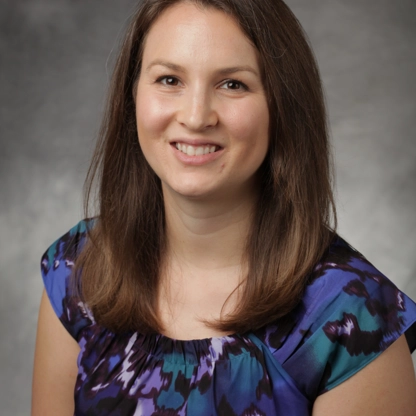
Jennifer Spicer is course director of the Introduction to Human Disease course at Emory University School of Medicine, Director of the Medical Education Distinction for the internal medicine (IM) residency, and Subspecialty Curriculum Lead for the IM residency. She currently serves on two committees for IDSA: the Teaching and Learning Resource working group for the IDSA Medical Education Community of Practice and the Digital Strategy Advisory Group. In addition, she represents the Southern Region on the Professional Development Committee of the Medical Education Scholarship Research and Evaluation section of the AAMC. She is currently completing her Master in Health Professions Education at the University of Illinois Chicago. She is passionate about developing the teaching and scholarship skills of trainees and faculty, and her research interests lie in the areas of curriculum co-creation with learners and promoting medical education careers, particularly within medicine subspecialties.
Tell us how you became interested in medical education.
I have always loved teaching. Throughout grade school and college, I volunteered as a tutor and teaching assistant. During medical school, I led and developed curricula for the Emory Pipeline Program, a multi-tiered health education and mentoring program for students from under-resourced settings. Then, as a resident, I quickly realized that I was happiest when I was teaching my team or my patients. I was asked to be chief resident and that year is when I knew that teaching and mentoring had to be an integral part of my career.
What opportunities have you sought out as a medical educator to further develop your skills?
During residency, I was fortunate enough to be selected for the inaugural class of the Harvard Macy Institute started its Program for Post-Graduate Trainees during my second year of residency. That experience cemented my passion for medical education and motivated me to pursue a Master in Health Professions Education, which I am currently completing at the University of Illinois Chicago. In addition to those formal opportunities, I find peer mentorship a valuable way to grow as an educator. I have had the opportunity to work with phenomenal peers at Emory, through the IDSA Medical Education Community of Practice, and with my colleagues in the @MedEdTwagTeam. I also love to read, so I'm always looking for new education books!
How have you incorporated an interest in medical education into your career?
I expressed my interest in medical education early in my career, and this helped me find mentors who have played a critical role in helping me obtain educational leadership positions early in my career. Outside of the classroom, I still try to ensure that education infuses every part of my career since it is my primary passion. I invite learners to work with me in the clinical setting. I offer to mentor students, residents, and fellows interested in medical education. And I engage in medical education research. Connecting with other educators brings me joy, so I try to meet other educators at my local institution, within IDSA, and even in the virtual setting via Twitter. I've become friends with many medical educators on Twitter whom I have never met in real life!
How have you transformed your medical education work into scholarship?
I've always been told to "make it count twice" when doing educational projects. Early on I took this a BIT too literally and tried to create scholarship from every project that I did. Since that time, I have realized that it's better to focus my scholarship efforts on a limited number of projects. Before I start a new project, I perform a quick search to see what currently exists in the literature. Sometimes, this allows me to use others' work rather than re-creating my own program. For example, MedEdPortal has published curricula that can be reused or adapted. If I find a gap in the literature, then I consider how I can share my own experiences in a meaningful, scholarly way. I have used this strategy to publish an evaluation of the IDSA Antimicrobial Stewardship Curriculum, a workshop on virtual teaching, and an article about using visual abstracts to teach health professionals about COVID-19. I've found that it's critical to discuss my projects with others who have more experience with medical education scholarship, especially at the beginning of a project!
What are some techniques you have incorporated into your ID preclinical curricula?
Whenever I work with pre-clinical medical students, I try to ensure that I teach them content that is applicable to the clinical setting. I think we undervalue the importance of involving students as co-creators of their learning experiences. I always try to ask learners what resources they are using outside the classroom for their own learning and consider how I can capitalize on those resources in my course. Students always have great ideas for how to improve their courses, and involving them in planning their own learning increases buy in. One example of how I have down this is incorporating Anki cards as a learning resource in my course. Anki is a free electronic flashcard application that most medical students use for spaced learning. Since I knew that students were already using it, I decided to create flashcards for them to use for their studying. The Anki cards were a huge hit AND improved their learning!
What are some of your favorite strategies for case-based conferences?
Case-based conferences are a great venue for engaging the entire audience in the decision-making process. I love to involve the audience in the case by including audience response systems or small group activities. When I present a case, I try to remember aspects of the case that result in robust discussion within our team, with other specialties, or with the patient/family. Those are the parts of the case where I involve the audience in some way. Maybe I have them up/downvote the differential diagnosis. Or I make them decide between two options that we were debating and have groups defend their decisions. I have found that using polls to show the audience that a diversity of opinions exists among them helps participants feel more confident in voicing their opinions.
What innovative educational program or process are you most excited about currently?
Recently I have been excited about learner involvement in the co-creation of courses and programs. We underutilize our learners. They are experts in their experience of our curricula and programs, and they often have great ideas about how to improve them. Involving them in the planning process in a meaningful way leads to better outcomes. Plus, I've learned so much from students, residents, and fellows. They help me discover new resources or view issues from a new perspective. We should involve learners as peers in all programs. Giving up control can be difficult, but it results in a richer experience for everyone.