
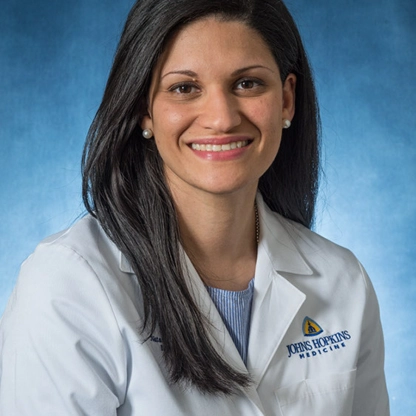
I am focused on graduate medical education. I work with residents in my role as internal medicine residency program director for the Osler program and with fellows in my role as associate fellowship program director. Prior to becoming residency program director this year, I directed the Medical Education Pathway for our residency and served as a clinical coach for the residency. I am interested in women in medicine, career planning/transitions for GME trainees, and how we can use education to develop the next generation of HIV providers.
How did you get interested in medical education?
My chief resident year was incredibly formative for me and helped me realize that I love working with GME trainees, helping trainees think about career planning and even the administrative side of GME programs. I remember getting a pen at an ACGME conference that had the core competencies written on it. I thought it was pretty cool, which lead to my co-chiefs making fun of me for being a huge nerd.
How have you integrated medical education into your career?
My time is split between my formal GME roles and clinical care--so I spend the majority of my time in med ed. I feel very lucky that this is the case!
What strategies have you used to transform your medical education work into scholarship?
As I've gotten more experience (a nice way of saying older), I've learned from mentors that if you are going to develop med ed programs you should think from the outset how you can turn that into scholarship. So planning on turning an effort into scholarship from the beginning has probably been the most helpful strategy.
Tell us about the Johns Hopkins COVID-19 Grand Rounds that you developed.
COVID-19 Grand Rounds is a monthly series that Michael Melia and I developed in the early days of the pandemic. Each session focused on a topic related to COVID-19 that is timely and pertinent to clinical care. We created the series because we wanted to provide our colleagues in our Division, who were working around the clock, a way to easily get updates on COVID-related topics and research. Since we made it an online series via Zoom we were able to make it open to anyone and everyone. We invite experts in the topic being covered and are fortunate to have had people from a variety of institutions, agencies, and even different countries share their expertise. At this point, we have hosted 29 sessions and have anywhere between 200-500 people attend. We also share recordings and PDFs of our slides at our COVID-19 Grand Rounds website.
In what ways has your approach to medical education changed or adapted during the COVID pandemic?
Like all educators, I think I've thought a lot more about how to effectively educate via online platforms. I've also had to think about how to build relationships with trainees and keep morale up in a time of heightened stress and work for everyone.
What are some of the most rewarding aspects of a career in medical education?
I very much enjoy helping trainees think about career planning. There's nothing more rewarding than seeing a trainee leave a program excited about their next steps and future.
What advice do you have for those in early career who would like to have a career in Medical Education?
Build a community of mentors, near-peers, and peers. Sponsorship, mentorship, and community are critical for all medical educators!
What other innovative educational program or process are you excited about currently?
Right now all I can think about is how we are responding to our current COVID surge! I'm excited to NOT be doing that!