
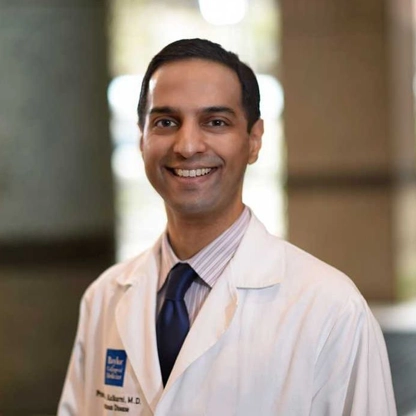
My current educational roles include serving as the Associate Program Director for our adult Infectious Diseases Fellowship Program at Baylor College of Medicine in Houston, Texas. In addition, I am an Associate Course Director for the first-year medical students' introductory course in Infectious Diseases. I also serve as one of the Site Directors for our hospital for Baylor's Internal Medicine Residency Program. Finally, as Assistant Chief of Medicine for our hospital, I help oversee the educational training environment within the Medicine service. My educational interests include infectious disease education for all types of healthcare professionals, diagnostic and clinical reasoning in internal medicine and infectious diseases, incorporating evidence-based medicine into clinical practice, and career development.
How did you get interested in medical education?
I happened to do all of my training (medical school, residency, chief residency, and fellowship) at Baylor College of Medicine in Houston. It was a phenomenal place to train because we serve such a wide spectrum of patients and encounter a truly diverse array of clinical pathology. In addition, the clinical education I received during my training here from exceptional faculty and peers was outstanding. I was fortunate to have worked with so many tremendous clinicians and educators over so many years. It was inspiring and spurred my interest in medical education.
How have you integrated medical education into your career?
I have integrated medical education into my career by serving in several educational leadership roles for my institution and my hospital. I also routinely round in the hospital with medical students, residents, and fellows both on the inpatient Infectious Diseases service and in Inpatient Medicine. I also work with trainees in outpatient Infectious Diseases Clinic. In addition, I routinely give lectures and seminars to students, residents, and fellows. Finally, although not directly related to medical education, I frequently give interviews to media outlets about infectious disease topics to provide education to the general public about important current events in medicine.
You developed a novel pre-clinical elective at your institution, “COVID-19: Perspectives from the Front Lines.” What can you tell us about that process?
During the spring of 2020, when the pandemic was just first getting started, I was approached by two medical students at a time when medical students around the country experienced significant changes to their clinical curriculum because of the inability to do clinical rotations due to the unknown nature of how the pandemic was going to progress. The students were interested in getting more involved and engaged with the pandemic since they were not able to participate in clinical work for a period of time. In brainstorming what medical students could do, an idea we decided on was to help medical students understand more about different aspects of the pandemic response from other areas within the healthcare system. This culminated in our working together to design a seminar course for first- and second-year medical students focused on understanding how healthcare systems respond in a multifaceted way to global health emergencies, which is novel because it is not a typical part of the undergraduate medical education curriculum.
How have you transformed your medical education work into scholarship?
We were fortunate to have an abstract about our elective course accepted for poster presentation at IDWeek 2021. In addition, we are hoping to publish a manuscript describing the course and its impact on medical student education. Finally, I have been lucky to have been a part of 2 publications about the education of infectious disease fellows written with program directors around the country.
How did you get interested in medical education?
I happened to do all of my training (medical school, residency, chief residency, and fellowship) at Baylor College of Medicine in Houston. It was a phenomenal place to train because we serve such a wide spectrum of patients and encounter a truly diverse array of clinical pathology. In addition, the clinical education I received during my training here from exceptional faculty and peers was outstanding. I was fortunate to have worked with so many tremendous clinicians and educators over so many years. It was inspiring and spurred my interest in medical education.
What strategies do you utilize to engage learners in the field of ID?
I find infectious disease exciting because of the range of topics it touches. The field of ID interacts with so many disciplines, including basic science, microbiology, clinical medicine, diagnostic reasoning, administrative leadership, medical education, infection prevention and control, antimicrobial stewardship, hospital epidemiology, public health, and global health. So, one can pursue so many different paths after completing training in infectious diseases! The ongoing COVID-19 pandemic has truly demonstrated the importance and value of all types of ID clinicians everywhere.
You co-authored a paper on the education of ID fellows during the COVID pandemic. What lessons did you learn that you’d like to highlight?
We have all learned so much throughout this pandemic, which has had a dramatic impact on essentially every aspect of our lives. In terms of education of ID fellows, one main thing was that we all got a crash course in virtual patient care in the form of telemedicine. Most people did not have experience with telemedicine before the pandemic, but now some version of telemedicine is likely to stay even during the post-pandemic period. Another change many educators had to undertake was learning how to teach over virtual platforms, which the majority of people had also not done prior to the pandemic. This was an adjustment for faculty and trainees. Finally, social interaction was essentially taken for granted before the pandemic started. This was dramatically shaken because of the pandemic, so we had to brainstorm new ways to try and keep up these important human connections.
What advice do you have for those who would like to pursue a career in medical education?
The pathway for someone interested in medical education can feel nebulous at first. It is important to identify what kind of educational leadership roles you might want to take in the future. Also, even if primarily an educator, it can still be important to develop a specific (clinical or educational) niche and some expertise in a particular area. Finally, scholarship is an important skill for educators to develop simultaneously while they develop educational expertise.
What other innovative educational program or process are you excited about currently?
Over the last several years, we have increasingly formalized a non-clinical curriculum for ID fellows related to career planning and development. It is longitudinal and spans the duration of a typical 2-year fellowship. It has received very positive reviews from ID fellows over the last few years.