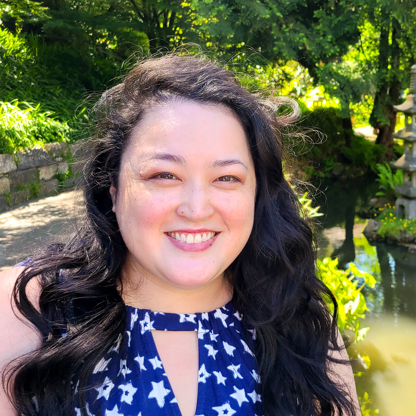
I am currently a combined Adult & Pediatric (Med-Peds) Infectious Diseases Fellow at Beth Israel Deaconess Medical Center (BIDMC) and Boston Children’s Hospital. I’m passionate about innovating and advancing digital education to teach about infectious diseases! I focus most of my teaching and workshops on helping trainees and faculty build their digital education skill sets, such as creating and utilizing infographics or navigating social media. I created and run the Febrile podcast and learning platform as a resource about high-yield ID topics (https://febrilepodcast.com/), and I also am a co-host for another podcast called Infectious Diseases Puscast, which provides updates on new ID literature releases. I have also loved my roles in the PIDS Education Committee and the IDSA Medical Education Community of Practice Teaching & Learning Resources workgroup.
How did you get interested in medical education?
I know I’m not alone in saying that my time as a chief resident was a formative experience, but I did find ways to start exploring medical education earlier than that. Before residency, I was committed to seeking leadership roles, which sparked my interest and introduced me to many wonderful clinician educators. In medical school, I spent time tutoring peers, and I also became interested in thinking about curriculum development. I was a founding member of a student-run group dedicated to the process of learning how to coordinate international medical service trips that partnered with local organizations. I served as the Curriculum Chair and created a pre-trip curriculum for members of the group, which included the facilitation of a lecture series on tropical medicine and the creation of a pre-trip manual with clinical, social, and historical background material. I also got a chance to lead our “Evening Report'' while in-country with guidance from faculty members, which was exciting. I was awarded grant support for this initiative from the MUSC Center of Global Health and was invited to speak about this experience.
I also received some grants in college considering medical education in a different setting: the structure of Chinese Medicine within the American higher education system. In my Honors College thesis, “Nebulous Needling: The Transmission of Chinese Medicine into the United States,” I examined how Chinese traditional medicine was translated, adapted, and incorporated to be taught in Chinese medical schools in the US. I was lucky to receive some grant funding to study this and visit some of the larger Chinese medical schools in the US. I also met with some medical students and physicians in Shanghai, China, during my studies there.
I would round this out by saying that I was fortunate to complete my fellowship in an institution that truly values medical education and has a mission to develop and train effective medical educators. I’ve been inspired by many role models and leaders in MedEd, both inside and outside ID. At the end of the day, teaching has always given me an outlet to be creative and have fun with topics and learners, which made me happiest!
How have you integrated medical education into your career?
While in residency, I served as an Internal Medicine-Pediatrics (Med-Peds) chief resident during my PGY-4 year. The following year, I was also a Pediatric Chief Resident for the Nationwide Children’s Hospital residency program. I still came into ID fellowship a bit undifferentiated, though, and I continued to consider whether medical education leadership and research would be my primary focus by exploring various experiences. I participated in some ID teaching in medical student courses as well as the direct teaching we get to do while on the inpatient consult team.
The most pivotal experience I have had so far was being selected for the Rabkin Fellowship in Medical Education. This program provided background in the theory and language of medical education, curriculum design, evaluation/assessment, academic leadership, and more. This fellowship focused on education research skills, and I also have supplemented this with additional courses through the Shapiro Institute Medical Education Scholarship program. Most importantly, I was joining an amazing community of educators who I rely on for advice and guidance!
Most of my teaching has focused on leveraging technology tools and digital education platforms for teaching. I give workshops and sessions on topics to a variety of learners, from residents to fellows and faculty, such as getting started with infographics, navigating Twitter/tweetorials, and more. Shreya Trivedi and Adam Rodman co-direct the Innovations in Media & Education Delivery (iMed) initiative at BIDMC, and I’ve been lucky to work with and learn from them. We even have a Digital Educator Track in the residency here! I was able to be a part of the steering committee and lead the poster session for the most recent iMed conference, “Digital Education 2022: Building Skills, Community, and the Future of Medical Education”.
Lastly, I’ve gotten involved in a national setting by joining workgroups related to education in IDSA and PIDS. I also participated in the ACGME Milestones 2.0 workgroup for the Pediatric ID subspecialty.
Tell us how you decided to start Febrile Podcast? What were some of your inspirations?
Febrile really started because of my love for case conference! I always loved our fellows case conference, led by the amazing Wendy Stead (our BIDMC ID program director). At this point, I was also running our BIDMC ID fellowship Twitter and observing the potential and excitement around tweetchats (such as #IDJClub). I reached out to Gerome Escota with an idea to do a tweetchat but make the topics case based (with infographics along the way demonstrating case details or learning points). He put me in touch with Nathan Nolan and Miguel Chavez at WashU, and I was able to be a team member of the newly created ID Fellows Network (a collaborative resource to promote clinical reasoning and medical knowledge in ID). From there, I started #IDFellowCase, a virtual case conference held through 1-hr synchronous tweetchat led by an ID fellow in training as well as a faculty moderator. I coordinated the cases and moderators, translated case content into a guided chat format, and created infographics. I still desired a better forum to communicate the nuances of clinical reasoning in ID, which I felt got a bit lost in the Twitter-sphere and wasn’t quite captured in many of the more general medicine/pediatrics-oriented digital education resources. I found that I wanted something that had more longevity as well, particularly given how much time I would dedicate to the project and something that would be easier to find and reference down the road (both for myself but also the other contributors)
While I was admittedly only an intermittent podcast listener before, I was still very aware of this huge world of innovation in digital medical education. While in residency, there was definitely a large presence in support of these educational podcasts. Residents at Ohio State / Nationwide Children’s could work with mentors such as Dr. Mike from Pediacast and Chris Chiu from Curbsiders and later Cribsiders. When I moved for fellowship, Shreya Trivedi (of CoreIM) and Adam Rodman (of Bedside Rounds) were great role models and sounding boards. I also found the success of the Nephrology Social Media Collective and their huge network of nephrology resources very inspiring and impactful. Basically, I pitched the idea to a variety of mentors and got a very clear response: “DO IT!”
The podcast allowed the same content to be addressed in more depth and was an avenue to engage with adult, pediatric, or Med-Peds ID colleagues. A key point for me is that podcasts have been shown to have many more benefits beyond just knowledge transfer. They can help build community and elevate voices that may not be heard otherwise, and I thought a podcast would be an excellent tool to highlight how we think in ID and our amazing community! Plus, it would not hurt to have some additional ID resources out there for trainees to use when they are thinking about or considering a future career in ID.
What have been some of the most meaningful moments of the Febrile Podcast project?
The most meaningful part of Febrile has truly been how lucky I feel meeting so many hard-working, dedicated, and fabulous ID trainees and colleagues!! This culminated at IDWeek 2022 for me, where I could meet many contributors and listeners in person. Along the way, many people often reach out, even with just a quick text or email, about how Febrile has been helpful. I love seeing pictures of Febrile being used out in the wild, such as infographics in a conference room I’ve never been to! Keeping Febrile running during fellowship has been challenging, particularly when I’m on service, and these moments have been invigorating!
You have managed to start an extremely successful educational enterprise in fellowship. What advice would you give fellows who aspire to do similar scholarly work or medical education innovations? How can they navigate this in their busy fellow schedule?
Finding a support network and sounding board(s) are crucial, and it helps to identify people in and outside of ID! I also find that identifying ways to make things count twice or three times is extremely valuable when your time is limited (but this remains good advice for the future as well). Transform what you are doing into various work products (take your conference presentation on a topic and translate that into a chalk talk, case report, infographic, podcast episode, etc.).
I rely a lot on my “peripheral brain” by taking notes and making to-do lists, which is how I stay organized. I will gladly nerd out about project management software/platforms that help with efficiency and productivity to anyone who is interested– I’m mostly using Notion now! That said, I’m still working on the best way to get everything done with a busy fellow schedule, and it’s a constant work in progress. Part of this process is truly allowing myself to embrace “Done is better than perfect” and to provide myself some grace with projects as well.
What advice do you have for someone who is starting a career in medical education?
- Seek out MANY mentors! Find mentors locally and externally, and don’t be afraid of a cold email to introduce yourself, ask a question, or pitch an idea. Identify specific mentors that can also help navigate a career in medical education. I will add that peer mentorship is invaluable and a great way to find collaborators.
- Consider your teaching philosophy and mission statement. Questions like what learner group do you want to work with? Why do you teach? These are tough and will evolve, but building this concept will help you choose what opportunities to focus on (and what to say no to). Share your interests with your division leaders, mentors, peers, etc., so that they can keep you in mind for future opportunities.
- Discover what resources are available to you locally, especially if there is an organization such as an Academy of Educators. This is usually a welcoming group that will allow you to meet other educators in your institution, and they will send out reminders about various MedEd sessions.
- Similar to the above, investigate what additional training opportunities might be available. I don’t think that everyone necessarily will be the best fit for a full Masters program, but you can also find brief structured courses or training programs to build specific skill sets in a timeframe/setting that works for you (whether that is bedside teaching, survey design, or another topic!) Keep an eye out for workshops regionally and nationally as well.
- Get involved and network! Consider joining a workgroup in the IDSA Medical Education Community of Practice or a PIDS workgroup if you are in pediatric ID. It’s a great way to make connections, be inspired by new perspectives, and get invaluable advice!
- Practice and get feedback on your teaching. Consider sending out an anonymous 360 evaluation for your teaching and leadership skills (which is slightly different than the clinical ones you might already fill out).
What other innovative educational program or process are you most excited about currently?
I have to do a shameless plug and promote a new program called the ID Digital Institute (IDDI)! We all know that digital platforms have become ubiquitous for teaching and learning medicine among trainees and faculty. I find that often educators and trainees feel getting started is overwhelming, but creating resources and engaging in social media are skill sets that you can hone with training and practice! The ID Digital Institute will be a free program that aims to explore digital/technology tools to create learning and teaching opportunities while also facilitating collaboration and community among ID clinician educators. IDDI fellows will progress through a one-year-long program with various rotations focused on digital education skills, such as navigating social networking sites, blogs, infographics, podcasts, and more! Our vision is that program graduates will remain part of the ongoing IDDI global community of practice to mentor future program fellows and others locally at their own institutions. The pilot program will be launching in 2023, and although we used the term “fellows” for the program, it will be open to residents, fellows, or faculty! I hope IDDI will also feed back into strengthening many of the digital ID resources in our community - whether that is Febrile, the ID Fellows Network, ID Fellows Cup, #IDJClub, and more that haven’t even been created yet!
For more info on IDDI: visit her website