
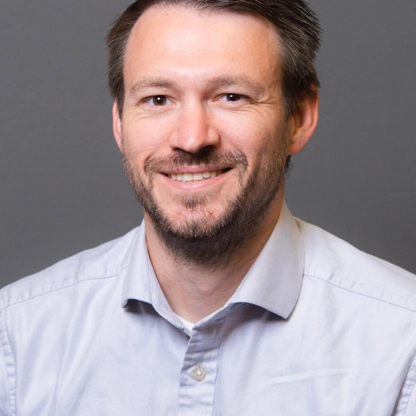
Todd McCarty, MD is an associate professor and the current ID Fellowship Program Director at the UAB Heersink School of Medicine. His primary education interests focus on professional development across the spectrum of medical education. He is also a learning community mentor for medical students spanning all four years of the medical school curriculum, as well as the current chair of the Medical Education Committee.
How did you get interested in medical education?
A mentor of mine once said that patient care allows you to impact the care of the patients in front of you, while being an educator allows you to impact the care of many more patients through helping train the next generation of physicians.
How have you integrated medical education into your career?
My ability to obtain roles as an overseer of students/fellows through a longitudinal curriculum occupies a large part of my time. And while they seem like bookends and unrelated, I feel like there's a nice synergy in the underlying goals and my approach to achieving them. Namely, how do you help guide someone from the start to whatever their goal might be, and how do I create the optimal learning environment to help support that path to success. I tell all of my students and fellows, that first and foremost I care about who they are and how they're doing. To take the best care of patients, we need to feel cared for as individuals. To achieve academic success, we have to feel like we're in a supportive environment. I want to set that stage for them to launch from.
How did you transform your interest in medical education into a career?
Everything starts with providing excellent care and an openness to positions that potentially outside of typical educational roles (like PD, clerkship director, course director, etc.). I think that combination led to noticeable opportunities for sponsorship in my path towards the roles that I hold now.
What is one medical innovation that makes you the most proud?
I can't look past the reach we had with IDJClub, especially in the early months of the COVID-19 pandemic. The volume and pace of data that was being published that first year was incredibly overwhelming, not to mention trying to figure out how to incorporate seemingly conflicting data into clinical practice. To create a platform for people all over the world to think through and discuss this data in a hierarchy free environment was a true highlight of the potential that social media held in the pandemic even in the midst of all of its flaws.
How have you transformed your medical education work into a scholarship?
The most visible aspect of this has been my role in the initial creation of the IDJClub effort on Twitter. I've also been fortunate to work with Jeremey Walker in the creation of the ID Fellows Cup that began while he was a fellow in our program, and most recently working on a publication from the Training Program Directors' Committee.
What are some of the most rewarding aspects of your career as an educator thus far?
Seeing people complete a stage of training and move on to the next step. Whether that's their residency of choice, joining an academic faculty, or entering clinical practice, it's a joy to be witness to their growth and accomplishments. Especially when you can see or hear from them years later and celebrate the successes they have gone on to have.