
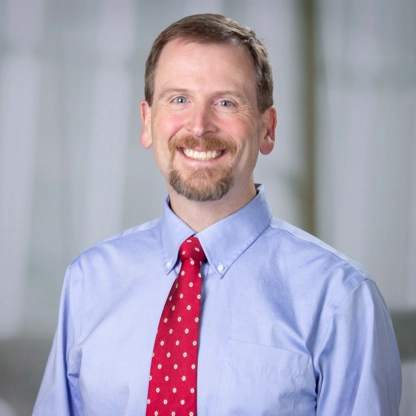
Dr. Trevor Van Schooneveld has been interested in education on a variety of levels. He is the program director for their ID fellowship and has been for the last 10 years. He serves as core faculty for the IM residency and he is the rotation director for their General ID rotation. He also provides numerous lectures for the medical students. He is also the medical director for both their hospital and state antimicrobial stewardship programs where he gets to provide lots of education related to antibiotic use.
How did you get interested in medical education?
I spent a year as an IM chief resident leading morning report, providing lectures, and teaching residents and found it very rewarding and wanted it to continue to be part of my career. As a fellow I noted many residents lacked ID knowledge and was passionate about helping them better understand how to interpret microbiology tests, diagnose infectious, and choose antimicrobials. My career has been a continuation of this work.
How have you integrated medical education into your career?
I lead our ID fellowship and so lead curricular creation/development as well as working with the fellows quite a bit. I greatly enjoy mentoring them in what it looks like to be an ID clinician. In addition education is an essential part of antimicrobial stewardship. As part of our program we have developed a nationally recognized website with numerous highly referenced guidelines and protocols. I am also the medical director of our state stewardship outreach program and so have been able to work with dozens of small hospitals in our state to help them develop their own stewardship program.
How did you transform your interest in medical education into a career?
Being interested in education antimicrobial stewardship and fellowship program director were great fits. I greatly enjoyed helping shape the practice of both local clinicians through stewardship and ID trainees through out fellowship. These have been very rewarding.
What is one medical innovation that makes you the most proud?
I would say creating and developing our ID fellowship. When I started I was tasked with starting an ID fellowship at our institution which I successfully did. When we started we were very small taking only 1 fellow per year but now have three fellows per year.
How have you transformed your medical education work into scholarship?
Education is a huge part of all stewardship initiatives and we have worked to measure clinical changes brought about by our stewardship work. Some examples include improvements in care of diabetic foot infections and treatment of C. difficile which we have published. We also published our work with small hospital stewardship programs supporting their program development through programmatic feedback.
What are some of the most rewarding aspects of your career as an educator thus far?
Seeing clinicians put into practice the principles I have taught them and then pass them onto students has been very rewarding as is seeing our ID fellows graduate and go into practice. Additionally it has been fantastic to see smaller hospital work to implement effective antimicrobial stewardship program.