
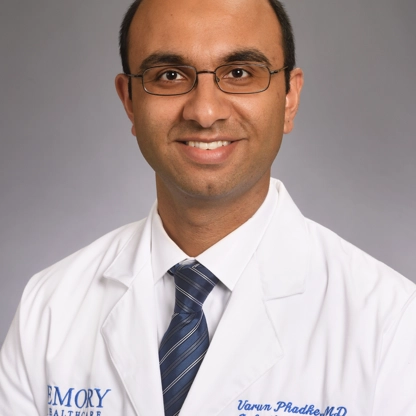
I am a clinician-educator and faculty member in the Division of Infectious Diseases at Emory University. I am passionate about teaching and assessing clinical reasoning skills – this encompasses clinical teaching, didactic activities (think morning reports, case conferences, etc.), faculty development, and learner remediation. I am privileged to be able to explore this interest with many different levels of learner through various educational leadership roles, including most recently being named Assistant Vice Chair of Education for Clinical Reasoning in the Department of Medicine. I also serve as Associate Program Director of the Emory ID Fellowship Program, Core Clinical Faculty in the IM Residency Program, Clerkship Director of the M3 Core IM Clerkship, and Director of the Microbiology Thread in the preclinical curriculum. Finally, I am the current Chair of the Teaching and Learning Resources Workgroup within the IDSA Medical Education Community of Practice and Past Chair of the Education Workgroup within the AST ID Community of Practice.
How did you get interested in medical education?
Like many of my educator colleagues, I was always drawn to teaching, even before I decided to attend medical school. A unifying – but often unstated – attribute of the teachers we admire the most is curiosity about how others think. With that perspective, it’s easy to understand why a passion for teaching might be independent of the content being taught – teaching is often less about the specific knowledge you are trying to transmit or develop and more about the journey that you help the learner take. All that being said, I had many formative teaching experiences on my way to where I am now – this includes being a tutor at almost every stage of education since high school, serving as a teaching assistant for two years in my undergraduate organic chemistry course (this was a uniquely lecture-free course that was entirely PBL, where I got to think about and practice asking questions that walked learners through challenging multi-step problems), and serving on the Student Teaching Corps in medical school (when I was charged with organizing/conducting both one-on-one tutoring and large group review sessions for the physiology section of our preclinical curriculum). Part of my attraction to internal medicine and infectious diseases was that continued emphasis on teaching (both the team and the patient). Still, I didn’t realize that a career in medical education was for me (or even possible!) until later in my ID fellowship.
I am indebted to my fellowship program director and mentor, Wendy Armstrong, for recognizing and cultivating my passion and skills for teaching (helping me find my dream job!) and my division director, Monica Farley, for giving me multiple opportunities to help lead educational programs right after completing fellowship. This included sponsoring me to further develop my skills through the Harvard Macy Program for Educators in Health Professions, which opened my eyes to the bigger world of “MedEd.” These activities connected me with colleagues and mentors and opened doors for me in the educational community within IDSA and other professional societies. Now I am lucky enough to work with learners at all levels, colleagues from all disciplines, and mentors from across the country.
How have you integrated medical education into your career?
My educator “footprint” has grown over time since I finished fellowship. I was named Associate Fellowship Program Director as part of my initial faculty position. Within my first year, I was lucky enough to be offered additional leadership roles in UME, first in the preclinical microbiology thread and then the core internal medicine clerkship. Through these roles, I discovered my passion for clinical reasoning and explored that through two opportunities with the Society to Improve Diagnosis in Medicine (Macy Diagnostic Error Learning Collaborative and the Fellowship in Diagnostic Excellence). This motivated me to infuse all my teaching activities with the principles and language of clinical reasoning, and in turn, allowed me to advocate (with the help of my institutional mentors!) for a new GME position, Assistant Vice Chair of Education for Clinical Reasoning, which I began in 2021. This truly unique role allows me to interface with multiple specialties and learner levels and think about programmatic innovations to enhance reasoning education for trainees and faculty.
Introducing medical students to the language of microbiology and clinical infectious diseases can be a challenge, but you have managed to create a successful spiral curriculum. Tell us some challenges and successes you have experienced in creating this curriculum.
I think all ID clinicians who are involved in preclinical microbiology/ID courses must contend with the same basic dilemma – balancing the NEED to teach about “taxonomy” (naming the bugs and drugs), which is not that exciting but foundational and often tested, with the DESIRE to teach about the “detective work” of ID (how we think about patients/syndromes), which is infrequently tested at the preclinical stage, but central to our identity in ID. This dilemma plays out differently whether microbiology is taught as a “block” separate from other organ system-based courses or if it is embedded as a longitudinal “thread” within those courses. Microbiology courses delivered in a contiguous block have the advantage of being able to immerse students in the taxonomy but are less easily able to contextualize the syndromes (especially if the block precedes all the organ system courses!). In contrast, microbiology courses delivered as a thread can more organically compare/contrast ID syndromes with the non-infectious diseases that learners are encountering but must expend more time revisiting the taxonomy (“remember Staph?”). My microbiology curriculum is delivered through a longitudinal “thread,” and I have tried to incorporate principles of learning theory and best practices I learned from local colleagues and those at other institutions to maximize student engagement. I also benefit from having bookends to my thread led by phenomenal ID educators (Jennifer Spicer and Wendy Armstrong)!
Successes – In any fact-dense content area, learners benefit from knowledge retention and retrieval frameworks. At the same time, learners may get confused hearing about the same concepts in multiple different ways. To tackle this, I gradually took over the delivery of most of the thread content, which now means I get to lay a foundation for every concept early on, revisit them using the same terms and figures in every didactic activity, and plan intentionally when and how each next layer of information gets added. In this way, teaching the “taxonomy” becomes an incremental compare/contrast activity driven by clinical syndrome rather than microbiologic classification, which feels more organic and less rote. I also LOVE showing students how directly applicable the facts are, using real clinical vignettes to illustrate how the principles we cover in lecture inform the way we order and interpret diagnostics and select/stop empiric and definitive antimicrobial therapy. When a student who has never taken microbiology before and is just 4 months into medical school can tell me why a neutropenic patient needs mold prophylaxis or why we cover anaerobes in a liver abscess, I count that as a win.
Challenges – I often think fondly about my days as a TA for my PBL-based organic chemistry class and hope one day to transform our microbiology thread into a similar problem-based small group-driven curriculum supplemented only with asynchronous “mini-lectures”. However, one consistent challenge of delivering microbiology as a “thread” is negotiating ownership of content, time, venue, modality, and assessment method with the courses in which the thread is embedded, which limits how much and how quickly change can happen.
Your passion is clinical reasoning and diagnostic errors. Tell us about the exciting initiatives you have taken to try to teach learners across the spectrum about clinical reasoning. (We understand you have been invited to take part in some exciting initiatives through the Macy Foundation and would love to specifically hear more about this.)
I love to talk about clinical reasoning with anyone who will listen!
Some initiatives we have taken over the past few years:
- At the start of the COVID pandemic, our medical school, like many others, paused clinical rotations and invited faculty to create innovative virtual electives during that gap. We created a “clinical problem-solving” elective to teach students the language of diagnostic reasoning through focused didactics, gamified small group work tackling challenging cases and real-time interaction with invited case discussants. We presented feedback about this elective at the SIDM 2020 annual meeting, which inspired ongoing curricular efforts in clinical reasoning at our institution and others. It also motivated several students in the elective to create a Clinical Reasoning Interest Group!
- The Macy Diagnostic Error Learning Collaborative was a unique opportunity for me to network and collaborate with peers and mentors across the country on curricula to improve diagnosis based on competencies published by SIDM. Through this collaborative I was able to develop and share tools for clinical reasoning assessment (of written notes and oral presentations) we were creating for our medicine clerkship and learn from colleagues who were creating their own curricula/tools for other learner levels. This opportunity resulted in numerous lasting collaborations and ongoing mutual mentorship activities and motivated me to apply for (and complete) the SIDM Fellowship in Diagnostic Excellence.
- In my new GME role (Assistant Vice Chair of Education for Clinical Reasoning), I am charged with infusing more explicit teaching about reasoning concepts into our training programs, including the residency program. Last year I worked with our then rising chief residents to develop best practices for organizing and running morning reports, and essentially ran a “morning report simulator” (assigned each chief a case the night before a biweekly meeting and tasked them with identifying potential pivots for discussion, reasoning take-homes, and small group activities for them to practice deploying with the rest of the group). This year we have also launched an exciting new recurring noon conference format called #ReasonUp, a CPS-style session with an emphasis on teaching clinical reasoning skill development. We aim to turn this into a venue for residents and faculty to practice dissecting cases and sharing that wisdom with others.
Who or what are your sources of inspiration in medical education?
My sources of inspiration fall into three categories, which intersect in the world of clinical reasoning.
First, I have a deep respect for expert clinicians who are dedicated to honing their craft, who remain humbled by cases and strive to learn with each one (i.e., who recognize the value of “deliberate practice” in clinical medicine), and who make the effort to “think out loud”, which includes sharing not only their structured approaches to unfamiliar problems or accumulated wisdom but their uncertainty and bias as well. We make most clinical decisions under uncertainty – more than we’d care to admit much of the time – and learners need to see and hear this, especially from experts!
Second, there are innumerable educator colleagues I could call out as sources of inspiration – I’ve alluded to many here at Emory who have (and continue to!) mentored, sponsored, and collaborated with me since I started ID fellowship, and this has since grown to include many colleagues immersed in the world of diagnosis at other institutions. Several of us locally started a “MedEd Book Club” a few years back to meet regularly over dinner to discuss a book/article. Those get-togethers are also rejuvenating and inspiring for me.
Finally, and most importantly, I am inspired by my learners. Referring back to how I answered the first question, I am always curious to understand how learners tackle an unfamiliar problem – this shapes my teaching and understanding of the problem. Indeed, many of the best “schemas” in reasoning arise not from solitary reflection on a clinical problem but a collaborative exploration of how others authentically dissect it. Directly interfacing with learners also keeps me humble and attuned to the unique challenges they face during training – how easily these are forgotten!
What advice do you have for someone who is starting a career in medical education?
Teaching is an art, a skill, a science, and a social activity. This is a useful way to structure the kinds of things you can do to build your career in education:
- Art – Go and watch others teach, not to learn the content but to be exposed to different strategies to navigate common teaching scenarios. At the same time, ask teachers you admire to come and watch you and ask for their perspectives and feedback.
- Skill – Teaching excellence is a result of deliberate practice. This doesn’t just mean taking on lots of teaching obligations – it means pushing yourself to try something a little different each time you teach or create/plan an educational activity, even if it makes you uncomfortable or runs the risk of falling flat with learners. The latter is often a strong deterrent for teachers who run a consistently “highly reviewed” session…but be brave!
- Science – Identify an educational focus (learner level, teaching/assessment/feedback, one-on-one/small group/large group, etc.), dig into the literature, and use what you find to infuse your teaching practices with evidence and plan what you can add/share. We spend a lot of time spinning our wheels and functioning in silos as teachers – tap into the learned experience of others!
- Social activity – Build a mentorship team and network/community inside AND outside your specialty and institution. This will help rejuvenate you when navigating frustrations, create opportunities for you (to collaborate, present, author, etc.), and stretch your skills and perspective.
What other innovative educational program or process are you most excited about currently?
I am excited about many different ideas to intentionally (re)design our clerkship, residency, and fellowship curricula to build reasoning skills. This year we will be piloting multiple revamped interactive didactic sessions in the M3 medicine clerkship for students to engage with reasoning concepts and apply them to core skills (like notes, presentations, and problem lists). I hope to grow our #ReasonUp conference in the residency program to give residents and faculty a platform to showcase their thinking and an outlet to transform the interesting cases they see into scholarship about reasoning. Finally, there are many elements of fellowship training – for example, in the microbiology lab, or in subdomains of ID like transplant, ortho, critical care, or neuro-ID – where we have opportunities to build decision-making skills in an evidence-based and focused way.