
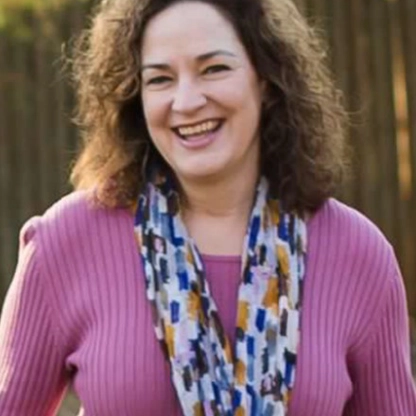
Vera Luther is Associate Professor of Medicine in the Department of Medicine, Section on Infectious Diseases at Wake Forest School of Medicine in Winston-Salem, NC. At Wake Forest, she is the Program Director for the Infectious Diseases Fellowship, Core Faculty for the Internal Medicine Residency Program, and Associate Medical Director for the Antimicrobial Stewardship Program. Her scholarly interests involve medical education, medical decision-making, and antimicrobial stewardship. She currently serves as Chair of the IDSA Antimicrobial Stewardship Curriculum Workgroup and the IDSA Medical Education Community of Practice Mentoring Workgroup.
How did you get interested in medical education?
My interest in medical education actually stemmed from a long-standing interest in psychology. I’ve always been fascinated by how people learn, think, and make decisions. I love the complexity of clinical medicine, I love learning and teaching, and I love continuously trying out new ways to do things better. When I am teaching about or role-modeling clinical reasoning skills, I get to incorporate my interests in decision psychology and medical decision-making. Medical education activities give me the opportunity to combine multiple interests while also experiencing the joy of working with learners – the enthusiasm, spirit of inquiry, and delight in new discoveries are so rewarding!
How do you incorporate that interest into your career?
I currently serve as the ID fellowship program director at Wake Forest, but am involved in medical education with learners at all levels. In my teaching activities, I enjoy incorporating frameworks for how to evaluate patients with certain conditions, how to think about differential diagnoses, and how to approach a diagnostic or therapeutic dilemma. I often teach on various aspects of antimicrobial stewardship, the practice of which must incorporate a mindful approach to patient care. Discussing the “sticking points” in the practice of antimicrobial stewardship with learners allows me to incorporate my love of clinical reasoning and medical education.
How have you transformed your medical education work into scholarship?
I try to look for opportunities to add something new to what is already known about a particular educational practice. I have learned the importance of planning educational activities and curricula far in advance so I have time to: (1) search the current literature and published methods for addressing the educational need I am working on; (2) brainstorm about ways to innovate; (3) plan, plan, plan and (4) revise, revise, revise. Not all educational activities can be transformed into scholarship, but if I am working on an educational activity that has that potential, I try to make sure I am accomplishing Glassick’s criteria for scholarship and, if applicable, Kern’s 6-step model of curricular design. I have found these resources to be very helpful:
- Beck, D. E. (2010). Six Steps for Success in Accomplishing Glassick’s Criteria for Scholarship. If I am engaging
- Thomas, P. A., Kern, D. E., Hughes, M. T., & Chen, B. Y. (2015). Curriculum development for medical education: A six-step approach. Johns Hopkins University Press.
What are some of the most rewarding aspects of your career as an educator thus far?
For me, the most rewarding aspects of medical education are seeing growth – sometimes it’s the lightbulb moment, sometimes growth is much more gradual. Sometimes, growth occurs after a learner has struggled in some capacity. I also find the opportunity to work with learners over time to be really rewarding. Not only do I get to see their growth longitudinally, but I get to be on a learning journey with them. Working with ID fellows, in particular, is extremely rewarding – the road to mastery is not linear and progress is often a winding, convoluted process. I really value the opportunity to be a part of that journey and help learners achieve success on their own, unique path.
What are some challenges you’ve encountered as an educator, and how did you address those challenges?
The biggest challenge I have encountered is just that there is never enough time in the day to do all the things I want to do! I have tried to overcome this challenge by finding ways to synergize efforts and activities. I have also sought out opportunities for protected time to support my endeavors in medical education or education-related scholarship. For those who are just starting out in medical education, I think it is really important to be explicit about your goals, interest areas, and enthusiasm for educational roles so that colleagues and those in leadership positions can help identify opportunities that will be a good fit for you. It is also important to be realistic about what time and resources various endeavors will take…and introspect a little bit to figure out what truly energizes you.
You currently chair the IDSA Medical Education Community of Practice Mentoring Workgroup. Can you speak to the impact mentoring can have on an educator’s career?
Mentoring relationships are incredibly important and ideally benefit both the mentor and the mentee. I always recommend having multiple mentors who can provide a variety of perspectives. Mentors can help mentees better understand their own goals as well as how to accomplish those goals. Oftentimes, mentors can provide opportunities for guided self-reflection and help mentees to know whether they are on the right track or whether they need a course correction. They can also shed light on what the “track” options are. Some successful mentoring relationships are short-lived and primarily function to address a specific goal or issue. Conversely, some mentoring relationships can be long-lasting and even turn into professional collaborations where new ideas, creative approaches, and scholarly products are generated.
What innovative educational program or process are you most excited about currently?
I am really excited about the launch of the IDSA ADVANCED Antimicrobial Stewardship Curriculum. I have had the opportunity to chair the IDSA Antimicrobial Stewardship Curriculum Workgroup through the development of both the CORE and ADVANCED Antimicrobial Stewardship Curricula. Collaborating with workgroup members, who are experts in antimicrobial stewardship and medical education from across the country, to develop these curricula has been one of the most enriching experiences of my career thus far. The CORE curriculum is intended for all ID fellows, regardless of their ultimate career plans; while the ADVANCED curriculum is designed for ID fellows who are considering or planning to pursue a career in antimicrobial stewardship. More information about the curricula can be found here: https://academy.idsociety.org/
What are some ways IDSA supports educators in the field of infectious diseases?
IDSA supports ID educators in many different ways! Through IDSA, ID educators can hear about new ideas, engage in career development activities, network, get personalized coaching, and volunteer. Specifically, ID educators will want to join the myIDSA MedEd Community of Practice (COP) group and listservs, follow the MedEd COP twitter feed @IDSAMedEdCOP, and check out the IDSA MedEd COP website to hear about new ideas or issues in medical education. Educators can also engage in career development activities, learn new med ed skills, and network during sessions at IDWeek, pre-meeting workshops, and the MedEd COP reception. ID educators can highlight their work and learn new ideas and approaches from other educators through IDWeek abstracts in the Med Ed category. Additionally, educators can get personalized coaching on their career through the Clinician Educator (CE) coaching program surrounding IDWeek. And, educators can also get involved through volunteer opportunities with the IDSA MedEd COP workgroups and IDSA Education committee.