
IDSA Leadership Institute Leadership Bolus
Issue 16: October 2025

Nominate a colleague to apply for Community of Leaders
Applications are open for the 2026 Community of Leaders program. As a graduate of the Leadership Institute, we encourage you to spread the word with your networks and consider formally nominating individuals whom you believe would benefit from the program. Nominations are due Nov. 7

Are We Being Gaslit? Unpacking Language in the ID Workplace
Monday, Dec. 8 | 1 p.m. ET | Virtual
Join us for an engaging conversation with infectious diseases leaders Gonzalo Bearman, MD, MPH, FIDSA, and Priya Nori, MD, FIDSA, as they explore the power of language in shaping workplace culture. Don’t miss this thought-provoking discussion designed to spark reflection and dialogue across the field.
Meet the contributor, Retired Col. Joshua Hartzell, MD, MS-HPEd, FIDSA
 Dr. Hartzell is a member of the faculty for the IDSA Leadership Institute. He is a board-certified internist and infectious diseases physician. He served 25 years in the United States Army, including a deployment to Afghanistan as a battalion surgeon with the 82nd Airborne Division, before retiring in 2023. He has held multiple academic roles including assistant dean for faculty development at the Uniformed Services University and program director for the National Capital Consortium Internal Medicine Residency. He completed a Master of Science in Health Professions Education at the MGH Institute of Health Professions, where he continues to teach leadership development. Dr. Hartzell’s current academic interests include leader and faculty development to empower leaders to create positive change in their spheres of influence at work, home and communities.
Greetings,
Many of us desire change where we work. We would like to change processes or change the culture of our work environment. The good news is that these changes are possible.
Change is the work of leaders.
Many of you are leading change efforts or are going to be leading change efforts. Our job as leaders is to help innovate and lead changes to improve the places we work, medical education and, ultimately, patient care.
A recent study by McKinsey & Company examined change efforts and what predicted success. While the organizations studied were not in medicine, the lessons are valuable. The article is a little business heavy but worth reading. Here were some key processes that helped enable successful transformation.
1. Employ strategic communication.
a. Line-manager briefings
b. Leadership town halls
c. Cascading communication (leader to leader down the org chart)
d. Emails
e. Communication campaigns on specific topics
Rarely have I seen effective communication strategies. There is communication at the beginning, but it quickly fades away as the project moves forward. Use these principles to develop an ongoing strategy to communicate about your change initiative.
2. Put high performers on top priority projects.
“Rather than overloading high performers with too many initiatives, companies should keep these individuals focused on the biggest, and often highest profile, initiatives.”
Anyone here feel oversaturated on tasks and wish you had more time to work on your most important project? I understand the reality of the situation, but we really need to think about this as individuals and leaders if we want to make the largest projects successful.
3. Adapt goals for employees at all levels.
a. How as a leader do you align individual and organizational goals?
Investing in people is a powerful motivator so anytime you can align individual and organizational goals, it is a win. Also, help people on the front line to see how their work matters and the impact they have on the larger mission. Sometimes they need to see the link so that they feel the importance of their work.
Evidence-based leadership corner
Give me a break … how about a micro-break?
Patricia Albulescu et al. published a systematic review, “‘Give Me a Break!’ A Systematic Review and Meta-Analysis on the Efficacy of Micro-Breaks for Increasing Well-Being and Performance” in PLOS One in 2022.
I love this paper because it highlights the importance and evidence of taking breaks during the day. The paper highlights the “human energy crisis” and the need to have a “process of recovery or replenishment.”
We have previously talked about making sure you take your vacation to prevent burnout. Start planning now for this winter and next spring!
Albulescu’s paper focused on micro-breaks during the workday. Good and bad news: “Overall, the data support the role of micro-breaks for well-being, while for performance, recovering from highly depleting tasks may need more than 10-minute breaks.” So, taking a break will boost your energy, but the data are still out on whether it improves performance. Personally, I think there are enough data, and my experience is that taking a short break allows me to recharge and then dive back in more ready to work. Give it a shot and maybe add a little activity, like walking outside!
Lead with caring, my friends!
Josh
Coaching corner with Julie Trivedi, MD, CPCC, FIDSA
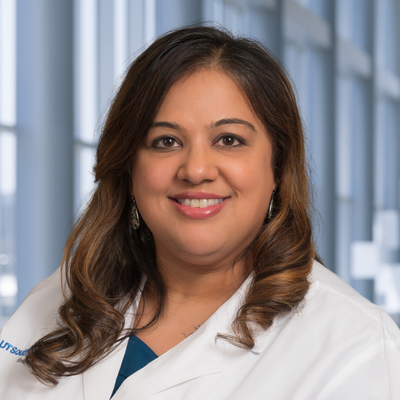 Julie is a board-certified infectious diseases physician, mom of two girls and a certified professional Co-Active Coach. She is actively involved with the Society for Healthcare Epidemiology of America and is currently serving as the chair of the DEI Committee. She has completed the Co-Active Training Institute Leadership Experience, was part of the IDSA Leadership Institute Community of Leaders program in 2022 and coordinates the Leadership Lecture Series for the Department of Medicine at UT Southwestern Medical Center in Dallas, Texas. She has trained as a professional coach through the Co-Active Training Institute. She actively coaches physicians and other health care professionals in medicine to find their voice and create an aligned future with full intentionality. Dr. Trivedi’s interests include faculty and leader development through mentorship and professional coaching.
Definition of success
Hi everyone! Congratulations to those of you who were promoted in the last year and have new leadership roles and to those of you who have made transitions in the past year as well. As many others in medicine, we are high achievers. We have our sights set on grand and lofty goals and understand the dedication, determination, consistency and perseverance it takes to achieve those goals.
However, as successful as we may be, we often make it difficult to feel successful. Our feelings of success and celebration are often short lived — lasting a few days to weeks — before we move on to achieving our next goal. So let’s pause for a moment to reflect on these three questions:
1. What is your definition of success? What does success look like to you?
Is your definition of success attached to a specific goal? Perhaps receiving funding for a grant, or being promoted to associate or full professor, or getting that manuscript accepted at a journal?
When our goals for success span across our lifetime, we miss opportunities to feel successful in our day-to-day activities — which is why many of us are outwardly very successful but don’t often think of ourselves that way. “Being successful” becomes a dream relegated to “one day.”
What if we were to reframe with a smaller increment of time — success for this season of life, this week or perhaps this day? Something I do when I’m about to enter a busy week, such as attending on the teaching consult service, is to define what would make today a success. Perhaps it is making sure I stay hydrated or eat a nourishing meal or have dinner with my family. So I ask you, what would success look like for today?
2. What does success feel like for you?
At the end of the day, at the end of the week or at the end of your life, how do you want to feel?
Close your eyes and take a few deep breaths to ground yourself. Think about a goal you achieved - what did it feel like in that moment? Where in your body did you notice that feeling?
When I personally reflect on how I want to feel, the overarching feeling for me is a sense of contentment and acceptance that I did the best I could and showed up the way I wanted to for the people in my life who are important to me. It is to feel that I lived a deeply spiritual and meaningful life. When that is how I define success, I realize there have been many successes in my life outside of my material accomplishments.
So, to the third and final question:
3. What are you celebrating?
I start all of my coaching sessions with “What would you like to celebrate?” I ask this because our tendency is to get caught up in life and forget to celebrate ourselves. Ask any high achiever what they would like to celebrate and they will invariably mention awards, leadership roles, grants, publications and other tangible accomplishments. When I ask about personal wins, they will share how they noticed critical thoughts, showed some self-compassion and/or took time for self-care.
Aside from professional and personal wins, I like to ask, “What would you like to celebrate about yourself as a human and how you are showing up for yourself?” The answers inevitably transition from what we are doing to how we are being.
The focus often shifts toward giving ourselves grace, realizing that our behaviors and patterns geared toward external accomplishments have been engrained in us for years. Any attempts at change will require us to be patient with ourselves as we learn how to show up differently.
To bring it all together, notice whether your definition of success for your lifetime is cumulative — i.e., paper is published and I have a leadership role and was promoted and achieve financial independence? Or perhaps when I finish all my notes at work and I make a decent dinner for my family and I get enough sleep and I exercised for 30 minutes? What is the likelihood of success if we require all of our goals to be met, and more importantly, we only consider ourselves successful if and only if we meet all our goals?
When we take one goal and stack it upon another and another and believe that we are successful only if we achieve all of those goals, then we are setting ourselves up for disappointment. So replace the “and” connecting all the goals with an “or.” When we make it easier to feel successful, we build confidence and are more likely to have an optimistic outlook on our life.
I’d love to hear from you all about this topic.