

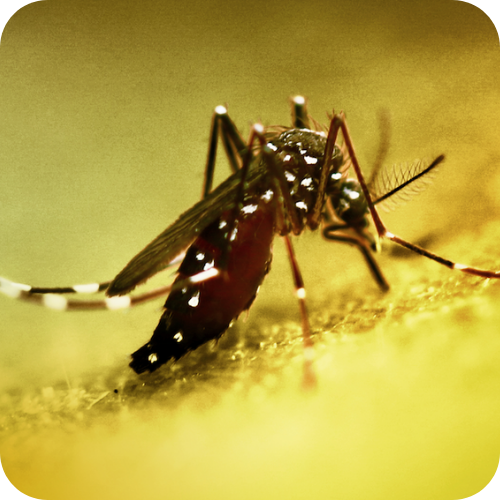
 The tropical regions of the Americas are characterized as endemic for arboviruses. However, there are some areas where one or another arbovirus predominates. Recently, characteristically South American arboviruses, such as Oropouche or yellow fever, have triggered international alerts due to outbreaks and pandemic risks. Previously unseen characteristics, such as vertical transmission of Oropouche, have even been documented. (1)
The continental regions of North America, primarily the U.S. and Canada, are at lower risk because they are neither endemic nor tropical areas. However, human migration and climate change may favor the spread of vectors, changing the epidemiological landscape. (2) Dengue and West Nile virus are two viruses that have proliferated along the southern border of the U.S. In general, Mexico and Central America are endemic areas for arboviruses, predominantly dengue, Zika and chikungunya. However, historical records have shown the presence of yellow fever and encephalitis viruses even in the 20th century. (3)
Other arboviruses have also left serological traces, such as the Mayaro virus, which we have studied in Veracruz, Mexico. (4) Since their colonization in the Americas, the Zika and Chikungunya viruses have caused Guillain-Barré syndrome and neonatal microcephaly. We have also analyzed their behavior in southeastern Mexico. (5) However, their prevalence has recently decreased.
Dengue has caused a pandemic alongside the COVID-19 pandemic, including reported cases of coinfection with both viruses. (6) Currently, dengue virus serotype 3 (DENV3) is dominant, leading to more aggressive and atypical symptoms and a subsequent increase in mortality. (7) Dengue has also been reported in areas far from the tropics, such as Argentina and Chile, although no autochthonous transmission of the virus has been reported in the latter country. (8)
In the endemic regions of South America, common arboviruses such as dengue, Zika, chikungunya, encephalitis viruses (West Nile and St. Louis) and equine encephalitis (eastern, western and Venezuelan) have also been reported. However, the incidences of other viruses, such as the Oropouche virus and yellow fever have also increased. (8) In these regions, vaccination has been chosen to limit the symptoms associated with these arboviruses. Vaccines are currently available for dengue (especially TAK-003), chikungunya and yellow fever. (9, 10, 11)
Given the high morbidity rates from these viruses in the Americas and the fact that programs aimed at controlling them have so far had no positive effects, we must view these diseases as vaccine-preventable and promote vaccination campaigns as is already being done in South America.
References
- Martins-Filho PR, Carvalho TA, Dos Santos CA. Oropouche fever: reports of vertical transmission and deaths in Brazil. Lancet Infect Dis. 2024;24(11):e662-e663.
- Del Carpio-Orantes L, Aguilar-Silva A. La cambiante dinámica epidemiológica del dengue en México. Med Int Méx. 2024;40(6):365-367.
- Valente-Acosta B, García-Acosta J. Fiebre amarilla: revisión concisa ante el actual escenario epidemiológico. Med Int Méx. 2017;33(5):648-654.
- Del Carpio-Orantes L, Mejía-Ramos SG, Aguilar-Silva A. Seroprevalence of Mayaro virus infection in Veracruz, Mexico. Travel Med Infect Dis. 2022;50:102464.
- Del Carpio-Orantes L, Peniche Moguel KG, Sánchez Díaz JS, et al. Guillain-Barré syndrome associated with Zika virus infection: Analysis of a cohort from the region of northern Veracruz in 2016-2017. Neurologia (Engl Ed). 2020;35(6):429-431.
- Del Carpio-Orantes L, Mejía-Ramos SG, Aguilar-Silva A. COVID-19 and dengue coinfection in Veracruz, Mexico. Travel Med Infect Dis. 2022;50:102467.
- Del Carpio-Orantes L, Trelles-Hernández D, López-Vargas ER, Munguía-Sereno ÁE. Atypical presentations of denguevirus 3 in Veracruz, Mexico. Travel Med Infect Dis. 2023;56:102657.
- Estallo EL, Sippy R, Robert MA, et al. Increasing arbovirus risk in Chile and neighboring countries in the Southern Cone of South America. Lancet Reg Health Am. 2023;23:100542.
- See KC. Dengue Vaccination: A Practical Guide for Clinicians. Vaccines. 2025; 13(2):145.
- Verma R, Khanna P, Chawla S. Yellow fever vaccine: an effective vaccine for travelers. Hum Vaccin Immunother. 2014;10(1):126-8.
- Weber WC, Streblow DN, Coffey LL. Chikungunya Virus Vaccines: A Review of IXCHIQ and PXVX0317 from Pre-Clinical Evaluation to Licensure. BioDrugs. 2024;38:727–742.

