

 The 2026 outbreak of Bundibugyo virus in the Democratic Republic of the Congo has turned a relatively neglected Ebola virus into a major international public health concern. First identified in 2007 in the Bundibugyo district of western Uganda, Bundibugyo virus is a distinct species of Orthoebolavirus and has previously caused only two recognized outbreaks. Its limited history has meant comparatively little investment in diagnostics, vaccines, therapeutics and epidemic preparedness. (1)
The present outbreak, however, is different in scale. It began in Ituri Province of DRC in April 2026 and subsequently spread across multiple provinces and across the border into Uganda. The World Health Organization declared a Public Health Emergency of International Concern on May 17, 2026. As of Sept. 13, 2026, DRC had reported 7,258 confirmed cases and 3,510 deaths, with a case-fatality ratio of 48.4%. The outbreak had expanded to 62 health zones in seven provinces, including the newly affected South Ubangi Province. (2) By Oct. 15, 2026, the outbreak spread to the North Ubangi Province, bordering the Central African Republic, making it the eighth province to be affected. (3)
By early October, total cases reached 8,300 and 4,018 deaths, including 50 health workers, of which one was evacuated to the Netherlands. (4) A Kenyan man died in Nairobi on Oct. 5, 2026, after returning from DRC. This was the first death from Kenya. Meanwhile, on Oct. 20, 2026, the first Ebola case was reported from Nigeria in its capital, Abuja. This was a Swiss woman who had arrived from Uganda. (5) After improvement, she was medically evacuated to Switzerland on Oct. 27, 2026. (6)
By Oct. 20, 2026, the total number of cases in Kenya reached nine, all of which belonged to the same cluster that originated from the index case, who died in Nairobi on Oct. 5, 2026. (7) The second death from Kenya was reported on Oct. 24, 2026. The deceased was a 65-year-old woman, who was also a close relative of the index case. (8) By this time, the outbreak had spread to four countries — DRC, Uganda, Kenya and Nigeria, making it the widest geographically spread outbreak in Ebola history. Even the largest epidemic (2014-2016) in West Africa, only involved three countries, namely, Guinea, Sierra Leone and Liberia.
On Oct. 28, 2026, scientists from Kenya, Nigeria, Uganda and DRC reported that genomic sequencing linked the viruses in Kenya and Nigeria to the same transmission chain originating from DRC. This meant there is a possibility that an undetected chain may be present in Uganda. (9)
Why Bundibugyo ebolavirus is challenging
One of the greatest difficulties is the absence of a licensed vaccine or specifically approved treatment for Bundibugyo virus. Unlike Zaire ebolavirus (ZEBOV), for which vaccines and monoclonal antibody therapies are available, Bundibugyo virus remains poorly characterized, and its medical countermeasure pipeline was virtually empty when the outbreak began. Diagnosis can also be difficult because diagnostic systems developed around better-known filoviruses may not perform optimally against more divergent viruses. Conflict, population displacement, mining-related mobility, limited health care infrastructure and difficulties with contact tracing further complicate containment. (10)
Recent studies have detected cross-reactive antibody responses after licensed Zaire Ebola vaccines. However, cross-reactive binding does not necessarily mean effective protective immunity. The glycoproteins of Bundibugyo virus and Zaire ebolavirus differ sufficiently that the degree of neutralization and protection cannot simply be extrapolated from Zaire Ebola vaccine efficacy. Experimental and clinical evidence remains incomplete, which is why the protection afforded by the licensed Zaire vaccine, Ervebo, against Bundibugyo virus is uncertain. (11) Therefore, having an Ebola vaccine is not the same as having a vaccine against every Ebola virus species.
An unprecedentedly rapid ebola outbreak
The 2026 epidemic has been described by WHO and Congolese authorities as the fastest-growing Ebola outbreak on record. Its exceptional trajectory reflects the interaction of biological, geographical and social factors, including delayed recognition, intense population mobility, interconnected transmission clusters, health care-worker infections, conflict and displacement, and weaknesses in surveillance and infection prevention. (12)
The geographical expansion is particularly concerning. What began in a relatively localized setting subsequently reached eight provinces, demonstrating how rapidly a pathogen can move through interconnected populations when detection and response capacity are strained. The continued transmission in North Kivu and other areas shows that apparent improvement in one province cannot necessarily be interpreted as control of the epidemic as a whole. (13)
A scientific response is finally accelerating
There is, nevertheless, reason for cautious optimism. The Coalition for Epidemic Preparedness Innovations is supporting three investigational Bundibugyo vaccines developed by the International AIDS Vaccine Initiative, Moderna and the University of Oxford. CEPI committed up to $8.6 million to accelerate the Oxford ChAdOx1 candidate, with manufacturing through the Serum Institute of India.
Moderna’s Bundibugyo mRNA vaccine (mRNA-1469), entered a Phase 1 clinical trial in August 2026, supported by $50 million from CEPI. In addition, the U.S. Department of State committed $50 million to CEPI to accelerate the development of Bundibugyo medical countermeasures. CEPI is also funding studies specifically investigating whether existing Zaire Ebola vaccines provide meaningful protection against Bundibugyo virus. (14)
These initiatives are important, but it should also be stressed that we began developing Bundibugyo virus countermeasures at scale only after the outbreak was already underway.
The real “wake-up” call
COVID-19 demonstrated how quickly an emerging pathogen can transform from a localized outbreak into a global crisis when surveillance, diagnostics, manufacturing capacity, health care systems and international coordination are inadequate. It also demonstrated the value of rapid genomic sequencing, flexible vaccine platforms, large-scale clinical-trial networks, transparent data sharing and coordinated international action. (15) The lesson from COVID-19 should not be simply that we need to respond faster after the next pandemic begins. We need to be prepared before it begins.
For policymakers, this means maintaining investment in pathogen surveillance, genomic sequencing, laboratory networks, infection-prevention infrastructure, health worker protection and emergency logistics even when no major outbreak dominates the headlines. (16) Also, vaccine platforms should be developed against pathogen families, not only individual viruses. Moreover, candidate vaccines should be capable of moving rapidly from laboratory research into clinical trials. Diagnostics must be sufficiently broad to recognize divergent pathogens, while regulatory and clinical-trial systems should be capable of rapid activation during emergencies.
Equally important is equity. The fact that a pathogen has emerged in a resource-constrained setting does not make it a local problem. The 2026 Bundibugyo outbreak demonstrates how insecurity, poverty, displacement and weak health infrastructure can amplify an outbreak, whose consequences ultimately extend far beyond the communities where it began. (17)
We must not return to “business as usual”
Perhaps the greatest danger will come when the present outbreak finally subsides. COVID-19 showed how quickly political attention, public health investment and institutional urgency can decline once the immediate emergency appears to be over. A similar cycle after Bundibugyo would leave the world vulnerable to the next unfamiliar pathogen, the so-called “Disease X”, a term coined by WHO.
Preparedness therefore cannot be an emergency expenditure that disappears when case numbers fall. It must become a permanent component of health security, which should be supported by sustained financing, trained personnel, research infrastructure, regional cooperation and pre-positioned medical countermeasures.
Bundibugyo ebolavirus is not merely another Ebola outbreak. It is a demonstration of what happens when a pathogen remains scientifically and operationally neglected until it acquires the opportunity to spread. The appropriate response is not complacency when this epidemic ends, but institutional memory. The objective of pandemic preparedness should be to make the next outbreak less surprising, less disruptive and less deadly, not simply to become better at responding after it has already begun.
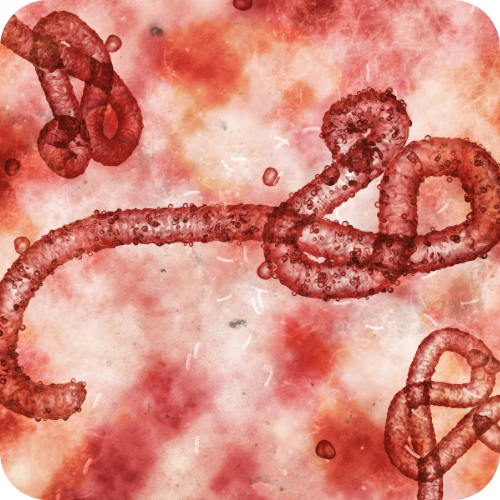
Image: Ebola virus illustration
References
- Kuppalli K, Mbala P, Dunning J. A review of Bundibugyo virus and the 2026 outbreak: lessons for epidemic preparedness. Lancet Infect Dis. 2026. Online first, July 31, 2026. DOI: 10.1016/S1473-3099(26)00414-7.
- WHO Regional Office for Africa. Ebola Bundibugyo virus disease outbreak Democratic Republic of the Congo. Uganda Weekly External Situation Report 18, data as of 13 September, 2026. WHO AFRO, Brazzaville, DRC. Accessed: September 19, 2026.
- Reuters. Congo Ebola spreads to new province bordering Central African Republic. October 15, 2026. Accessed: October 29, 2026.
- Associated Press. An Ebola treatment center was burned down as the death toll in Congo passes 4,000. October 2, 2026. Accessed: October 29, 2026.
- Reuters. Nigeria reports first Ebola case in woman who arrived from Uganda. October 20, 2026. Accessed: October 29, 2026.
- Associated Press. First confirmed Ebola patient in Nigeria evacuated to Switzerland. October 26, 2026. Accessed October 29, 2026.
- Reuters: Kenya confirms new Ebola case, total at nine, health ministry says. October 20, 2026. Accessed: October 29, 2026.
- Reuters. Kenya reports second death from Ebola. October 23, 2026. Accessed: October 29, 2026.
- Bloomberg. Ebola sequencing links Kenya, Nigeria cases to Congo chain. October, 28, 2026. Accessed: October 29, 2026.
- Kopp K. Bundibugyo virus disease: diagnostics and medical countermeasures for a neglected ebolavirus. Viruses. 2026; 18(7):775. DOI: 10.3390/v18070775.
- Lhomme E, Wiedemann A, Ayouba A, Ben-Farhat S, Thaurignac G, Roy C, et al. Cross-reactive Bundibugyo antibody responses after receipt of licensed Ebola vaccines. N Engl J Med. 2026; 395(6): 612-615. DOI: 10.1056/NEJMc2608018.
- World Health Organization. Ebola disease caused by Bundibugyo virus – Democratic Republic of the Congo. Disease Outbreak News, WHO, Geneva. 10 September, 2026. Accessed: September 19, 2026.
- Akem TE, Oben EC. Operational epidemiology of the early phase of the 2026 Bundibugyo virus disease outbreak in the Democratic Republic of the Congo and Uganda. PLOS Glob Public Health. 2026; 6(8):e0006680. DOI: 10.1371/journal.pgph.0006680.
- Coalition for Epidemic Preparedness Innovations. CEPI fast-tracks three Bundibugyo ebolavirus vaccine candidates. June 1, 2026. Accessed: September 26, 2026.
- Fauci AS, Folkers GK. Pandemic preparedness and response: lessons from COVID-19. J Infect Dis. 2023; 228(4):422-425. DOI: 10.1093/infdis/jiad095.
- Khoo YK, Wulandari S, Getchell M, Moe L, Kumar SS, Liu EJ, et al. National investment case development for pathogen genomics. Cell Genom. 2025; 5(3):100781. DOI: 10.1016/j.xgen.2025.100781.
- Phelan AL, Nuzzo JB, Gostin LO. The PHEIC for Ebola disease caused by Bundibugyo virus: an inflection point for solidarity and health equity. Lancet. 2026; 407(10545):2264-2267. DOI: 10.1016/S0140-6736(26)01037-8.

