
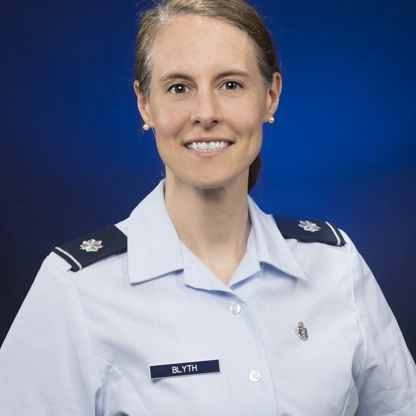
I’m the Infectious Diseases Fellowship Program Director, and I'm passionate about applying the principles of deliberate practice to expertise in medicine, teaching clinical reasoning, and trying to understand and improve recruitment to infectious diseases. I love my roles as the Chair of the IDSA Medical Education Community of Practice IDWeek Workgroup, a member of the ABIM ID Longitudinal Knowledge Assessment Approval Committee, and a faculty member for the Faculty Development Outreach and Certification for the Uniformed Services (FOCUS) program.
How did you get interested in medical education?
Like many others involved in medical education, my love of teaching predates medicine. My father, a family physician, and my grandfather, a chemist who studied humanities at the local college after he retired, inspired and role-modeled a love of lifetime learning and sharing that passion with others. Once I started as a medical student, I saw that same passion in the ID faculty who were so involved in teaching, and especially teaching clinical reasoning. I knew ID and remaining involved in medical education were for me.
How have you integrated medical education into your career?
I’ve been so lucky to have had the gold-standard of mentorship, coaching, and sponsorship (starting during my training, and lasting through today—, to name a *few*). I’ve been lucky enough to be embedded within graduate medical education (GME) programs since I’ve completed fellowship. In addition to the day-to-day joy of teaching, I’ve had the opportunity to create new curricula as a junior staff member, participate in scholarship, and be involved early on in several system-wide efforts at improving medical education in both the Military Health System as well as IDSA.
As the ID fellowship program director at Walter Reed National Military Medical Center, what are some educational programs you are excited about?
I moved across the country to serve as the program director at WRNMMC in January of 2020, so was still getting lost each time I left my office as the COVID-19 Pandemic changed everything. Taking on a new job in a new hospital at this time is not for the faint of heart. However, I’ve been continually thankful that the teaching faculty, fellows, and residents really push us to continually make our program better. At this point, like many other programs, we are trying to examine how we can more systematically approach wellness. We’ve added more routine time for our fellows and faculty to spend in various ways together to include bonding, being active together, and volunteering. I’m thankful for the fellows, whose interest, and passion drove these efforts. Additionally, my second-year fellows are currently working through their quality improvement project evaluating and updating our case-based ID Rotator curriculum. Hopefully, they will be ready to submit their work to an upcoming IDWeek . It’s always exciting to see a passion for ID and medical education spark in the next generation.
What can you tell us about your study of ID rotation characteristics and ultimate application for ID fellowship?
I wanted to look systematically at potential factors driving IM residents to choose (or not) to apply to ID fellowship. I was lucky enough to complete my training (residency, stayed on as chief resident, and fellowship) with the same institution, and stayed on as core faculty. Because of this opportunity, I had a really deep understanding of each stage of the GME training platform and how the records worked, which inspired this project. This was my first foray into medical education scholarship as a relatively junior staff member with a lot of support from more senior ID faculty who have consistently been tremendous mentors and sponsors, specifically Dr. Yun and Dr. Barsoumian. Before I go on, I do want to take a moment to state explicitly, anyone can contribute to medical education scholarship with a well thought-out question, systematic approach, and the right mentorship.
As for the particulars of study, at Brooke Army Medical Center, all interns were required to rotate on ID (rather than chose it as an elective), so I wanted to evaluate whether there were any characteristics of their rotation that affected their ultimate application to ID. We reviewed a number of potential factors, the faculty and fellows with whom the interns worked (including their years out of training, and other demographics), case logs categorizing the number and types of cases that were seen during their ID rotations, and timing of rotations during their intern year. Ultimately, we found that 7% of IM residents during that time applied for ID fellowship, and the experiences were largely similar between those who did and didn’t choose to apply to ID. Interestingly, 90% of those who applied for ID rotated on ID within the first six months of their intern year, compared to only 10% of those who rotated on ID the last six months (p=0.01). This fits with other data that indicates that there is a formative time for choosing specialization—and while that time may stretch into residency, it’s potentially a relatively short window. It’s important to keep in mind that this is a single-centered study within a military training program, so looking at this in civilian GME programs is a great future project for a budding medical education scholar.
What can you tell us about your involvement with the Faculty Development Outreach and Certification for the Uniformed Services (FOCUS) program at Walter Reed National Military Medical Center?
I have to mention again, I’ve had the support of amazing mentors and sponsors. The Faculty Development Outreach and Certification for the Uniformed Services (FOCUS) program purpose was to increase access to faculty development for faculty across the military. I was selected for the first Train-the-Trainer session to train local faculty to deliver faculty development at their home institutions, and have been involved since. I’ve had the opportunity to lead faculty development workshops across the country, as well as assisted in creating a new workshop that is now included among the sessions offered by other FOCUS faculty across the country. It’s been really rewarding to be involved with this program, not only to see faculty attending who are passionate about improving their teaching, but has helped me grow as an educator as well.
What advice do you have for someone who is starting a career in medical education?
I’ve enjoyed reading prior wisdom from featured IDSA educators, and agree that finding mentors and sponsors is key, especially as you are just getting started. Networking is also key and I encourage attending the IDWeek Med Ed COP Reception, where you can meet many others who are really passionate and involved in medical education. The one thing I always try to remind myself of is to make sure to think about how to capture impact (or get academic productivity) for the work you’re already doing. There are only so many hours, and if you’re struggling with something programmatically, many other folks are too—so if you have a creative solution, make sure to share it with others. This may mean filing for a non-research determination or working through an IRB-protocol, but try to ensure that you can disseminate the great work you have done so that others can learn and build on it as well.
What advice do you have for someone who is starting a career in medical education?
I’ve enjoyed reading prior wisdom from featured IDSA educators, and agree that finding mentors and sponsors is key, especially as you are just getting started. Networking is also key and I encourage attending the IDWeek Med Ed COP Reception, where you can meet many others who are really passionate and involved in medical education. The one thing I always try to remind myself of is to make sure to think about how to capture impact (or get academic productivity) for the work you’re already doing. There are only so many hours, and if you’re struggling with something programmatically, many other folks are too—so if you have a creative solution, make sure to share it with others. This may mean filing for a non-research determination or working through an IRB-protocol, but try to ensure that you can disseminate the great work you have done so that others can learn and build on it as well.
You currently chair the IDSA Med Ed Community of Practice IDWeek Workgroup. What are some ways ID educators can get involved in IDSA?
The first thing ID educators can do to be more involved with IDSA is to join our Medical Education Community of Practice (Med Ed COP). The Med Ed COP sends out alerts of upcoming opportunities for involvement. Another opportunity to get involved is to attend the upcoming IDWeek Med Ed COP Reception. During IDWeek we will be meeting on Wednesday, October 19, 2022 from 6:30-8 pm, our usual meeting night
Find more information on how to become involved with Med Ed COP.
What other innovative educational program or process are you most excited about currently?
Anyone who knows me knows how passionate I am about deliberate practice, coaching, and feedback. I’m particularly excited about how much our IDWeek Workgroup has been able to accomplish over the last couple of years,despite all of the other demands during the COVID-19 Pandemic. We piloted abstract feedback for medical education abstracts at IDWeek in 2021 and because of the success, it was extended to all 2022 abstracts. This year we’re piloting a program to coach a group of oral abstract presenters for their IDWeek presentations. Our goal is two-fold, improving the presentation skills of our ID colleagues and the quality of IDWeek.