
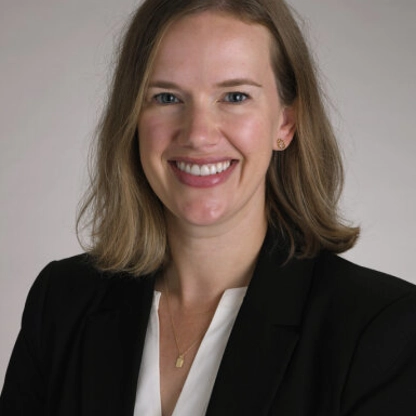
Rachel Sigler, DO, MPH, serves as an assistant professor in infectious diseases at the University of Kansas Medical Center, where she educates learners across the continuum of medical training, including medical students, residents, fellows and international observers. Her formal educational roles include serving as director of the Global Health Track for the fellowship program, serving as program director of international medical observerships for the university and leading educational initiatives within infectious diseases fellowship training. Her educational interests focus on transplant infectious diseases, global health education and preparing learners for complex clinical decision-making through innovative teaching strategies. She is particularly passionate about integrating artificial intelligence into medical education through simulation-based learning models that improve training in areas such as antibiotic stewardship, donor-derived infections and clinical reasoning. Ultimately, her goal is to create scalable, engaging educational experiences that better prepare learners for modern clinical practice.
How did you get interested in medical education?
My interest in medical education began during my own training, when I realized how great teachers and mentors shaped not only what I learned, but how I approached patients, teams and my career. I was especially drawn to educators who made complex topics feel approachable while creating environments where learners felt supported enough to ask questions and grow. During residency and fellowship, I found myself naturally gravitating toward mentorship, curriculum development and creating learning opportunities for others, which led me to serve in leadership roles such as chief fellow and eventually pursue formal educational initiatives. Over time, that interest expanded into building new curricula in global health, transplant infectious diseases and artificial intelligence in medical education because I enjoy identifying gaps in training and creating practical, engaging solutions for learners.
How have you integrated medical education into your career?
Medical education has become a central pillar of my career and is integrated into nearly all of my professional roles. In addition to teaching medical students, residents and fellows in both clinical and classroom settings, I have intentionally pursued leadership positions that allow me to shape educational experiences at a broader level, including serving as director of international medical observerships at my institution. I have developed curricula in transplant infectious diseases, global health and antimicrobial stewardship, while also creating AI-enhanced simulation tools to help learners practice complex clinical decision-making in scalable and accessible ways. Whether I am mentoring trainees on service, designing new educational programs or building innovative learning models, I view education as one of the most meaningful ways I can improve patient care and help develop the next generation of physicians.
How did you transform your interest in medical education into a career?
What began as an interest in teaching during residency and fellowship gradually became a defining part of my career because I intentionally pursued opportunities to build educational programs rather than simply participate in them. As chief fellow, I became deeply involved in curriculum development and learner mentorship, which showed me how much I enjoyed designing educational experiences with broader impact. I also realized that effective education requires creativity, ingenuity and a willingness to rethink traditional teaching models when they no longer meet learners’ needs. After joining faculty, I sought roles that allowed me to bring that philosophy into practice by leading our Global Health Track, directing international medical observerships, and developing innovative curricula in transplant infectious diseases and artificial intelligence. Medical education has become the ideal space for me to combine mentorship, innovation and problem-solving to create more engaging and effective learning experiences for future clinicians.
What is one medical innovation that makes you the most proud?
The medical education innovation I am most proud of is developing MedEdAI, an AI-driven simulation platform designed to help learners practice complex clinical decision-making in a scalable, accessible way. I initially created it as an innovation to facilitate easy simulations for faculty in transplant ID. As proof of concept, the pilot addressed gaps in antibiotic stewardship education, recognizing that many learners had limited opportunities to practice nuanced decision-making outside of real clinical encounters. The platform allows trainees to work through realistic patient cases, receive immediate feedback and repeat scenarios in a low-stakes environment, which helps build confidence and clinical reasoning skills. Since then, I have expanded this model into areas such as transplant infectious diseases and donor-derived infection education, and I am excited by its broader potential to improve training in underrepresented areas of medical education where traditional simulation can be resource-intensive or difficult to scale.
How have you transformed your medical education work into scholarship?
I have intentionally approached medical education work as both a teaching responsibility and an opportunity for scholarship. My educational interests have led to publications and national presentations focused on medical education, mentorship and coaching, including work related to trainee development and professional growth. More recently, I have focused on studying educational innovation by evaluating AI use, in particular AI-driven simulation through MedEdAI, with ongoing scholarship examining its feasibility, learner experience and potential impact on clinical education. My goal is not only to create effective educational programs locally, but also to contribute scalable models and evidence-based innovations that can be adapted by educators at other institutions.
What are some of the most rewarding aspects of your career as an educator thus far?
The most rewarding part of my career as an educator has been watching learners grow in confidence and eventually become mentors themselves. There is something incredibly meaningful about helping a medical student, resident or fellow navigate uncertainty, develop their clinical voice and realize they are capable of more than they initially believed. I have also found tremendous fulfillment in creating new opportunities for learners through curriculum development in global health, transplant infectious diseases and AI-driven education, particularly when those programs address gaps that previously existed. Knowing that I can positively influence both individual learners and the broader educational environment has been one of the most meaningful aspects of my career.