
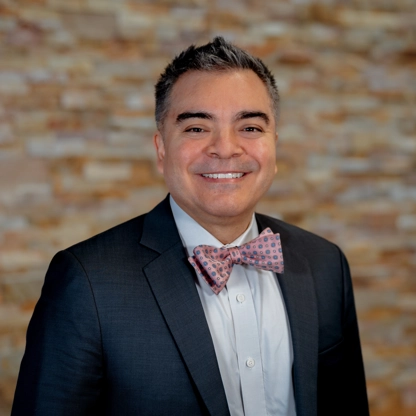
Ricardo La Hoz, MD, FIDSA, serves as director of transplant infectious diseases and program director of the Transplant Infectious Diseases Fellowship at UT Southwestern Medical Center, where he leads clinical education and subspecialty training. His work includes bedside teaching, formal didactics, and longitudinal mentorship of trainees and transplant professionals across multiple levels. He is particularly interested in clinical reasoning, curriculum development and building structured training environments that promote clinical excellence and independent decision-making in complex transplant populations. He is especially focused on teaching strategies to safely expand the organ donor pool while minimizing the risk of donor-derived infections. He also contributes to national educational initiatives through professional societies, with a focus on advancing infectious diseases education in transplant medicine.
How did you get interested in medical education?
Growing up, I had a front-row view of the impact an educator can have. My father was a university professor, and I would occasionally witness former students approach him with deep gratitude. Those moments left a lasting impression — they reflected a kind of influence that extends far beyond the classroom.
During medical school, I experienced this impact firsthand through exceptional mentors who shaped not only my knowledge but also my approach to patient care and professional identity. These experiences were formative and clarified my path. I came to appreciate that teaching carries a multiplicative effect — by shaping trainees, educators indirectly influence the care of countless patients and, ultimately, the health of entire communities. This perspective led me to pursue a career dedicated to the education and development of others in the same meaningful way.
How have you integrated medical education into your career?
I have integrated medical education into my career by following what has consistently inspired me rather than adhering to a predefined path. At the end of my training, I felt a deep sense of gratitude for the exceptional teaching, role modeling and mentorship I had received during medical school, residency and fellowship. It felt natural to give back — to help sustain that contagious enthusiasm for learning and patient care across generations of trainees.
This philosophy has shaped how I approach my work. Rather than focusing on projects that are simply advantageous on paper, I have prioritized those that I find meaningful and am genuinely passionate about. That has led me to invest deeply in bedside teaching, mentorship, curriculum development and program leadership, where I can have a direct and lasting impact. I have found that pursuing work that is personally meaningful not only makes the effort more sustainable, but also translates into more authentic engagement with trainees and more effective learning environments.
Over time, this approach has allowed me to integrate education seamlessly into my clinical, academic and leadership roles. Whether working with trainees locally or contributing to national educational efforts, my goal has remained the same: to help develop thoughtful, compassionate physicians who will, in turn, educate others and continue advancing the field.
How did you transform your interest in medical education into a career?
As a child, I witnessed a defining moment in my family’s experience with illness. A close family member became seriously ill, and at one point my mother was told that there was nothing more that could be done. She sought one more opinion at Johns Hopkins, and although she has endured many challenges since — including heart failure from multiple courses of chemotherapy — she also reached a point where she was able to run marathons. The physician who saw her gave my family something invaluable: more time together. I never had the chance to meet the physician, but my mother still remembers him.
Without realizing it at the time, that physician shaped how I think about medicine. He showed me that knowledge, judgment and compassion can profoundly change the trajectory of a patient’s life and the lives of those around them. Over time, I came to see medical education as one of the most meaningful ways to extend that impact — by helping train others to provide that same level of care, insight and hope.
What began as a deeply personal motivation evolved naturally into a career centered on teaching, mentorship and program development. For me, medical education is not separate from patient care — it is a way to amplify it, ensuring that more patients and families have the opportunity to share in those moments that matter most.
What is one medical innovation that makes you the most proud?
One area I feel particularly grateful to have contributed to is the work focused on safely expanding the organ donor pool. Through research on donor-derived infections and my involvement with the OPTN/UNOS Ad Hoc Disease Transmission Advisory Committee, I have had the opportunity to help define and teach approaches to assessing and mitigating infectious risks in donors with complex infectious conditions. This work has been closely tied to education — translating emerging evidence into clinical frameworks that can be applied by trainees and transplant teams in real time. These efforts are part of a broader, collaborative shift toward more evidence-based donor evaluation, with the goal of safely increasing organ utilization. Ultimately, this work aims to ensure that more patients can access lifesaving transplantation while minimizing risk — an approach with meaningful implications for reducing waitlist mortality.
How have you transformed your medical education work into scholarship?
My path in transforming medical education into scholarship has not been entirely intentional. Rather than setting out with a specific scholarly agenda, I have gravitated toward projects that I find meaningful and, importantly, fun — often arising naturally from clinical care. Over time, those efforts have evolved into research, publications and educational initiatives. I have come to believe that a career in medicine is a marathon, with inevitable ups and downs, and that engaging in work that is both meaningful and enjoyable is what allows us to sustain curiosity, productivity and long-term impact.
Another important aspect has been the need to continually evolve. Early in my training, the field of HIV care was a major source of inspiration for me to pursue medicine. However, by the time I completed my internal medicine training, transformative advances had reshaped that field. I found myself drawn instead to the complexity and emerging questions within transplant infectious diseases. Over the past two decades, the field has been increasingly shaped by emerging pathogens — such as HCV, SARS-CoV-2 and HHV-8 — that have created new opportunities to grow as both a clinician and educator, and to mentor trainees navigating similar challenges. In this way, my scholarship has developed organically at the intersection of clinical care, education and a willingness to adapt to where the field and its most important questions are evolving.
What are some of the most rewarding aspects of your career as an educator thus far?
The most rewarding aspects of my career as an educator lie in the profound impact that education has on patients and the broader health care system. What I find most meaningful is witnessing the growth of trainees into thoughtful, empathetic physicians who deliver truly patient-centered care. It is particularly gratifying to see them not only care for their patients with excellence, but also educate those around them, engage in research that advances transplant infectious diseases and, over time, become colleagues who keep us current and inspire us with their energy and fresh perspectives.
Many of our patients come to us with little hope, and it is deeply fulfilling to see them go on to live healthy, productive lives after transplantation — often as a direct result of the thoughtful, team-based care our trainees help provide. Through this combined clinical, educational and scholarly impact, our trainees contribute to improving health locally, regionally and globally. Seeing that ripple effect unfold is profoundly rewarding and reinforces my sense of optimism for the future of our field.