
Ambulatory antimicrobial stewardship metrics for SSTI and CAP
University of Michigan Medical Center, Ann Arbor, MI
Last Updated
September 29, 2026
Populations impacted
Ambulatory
Description
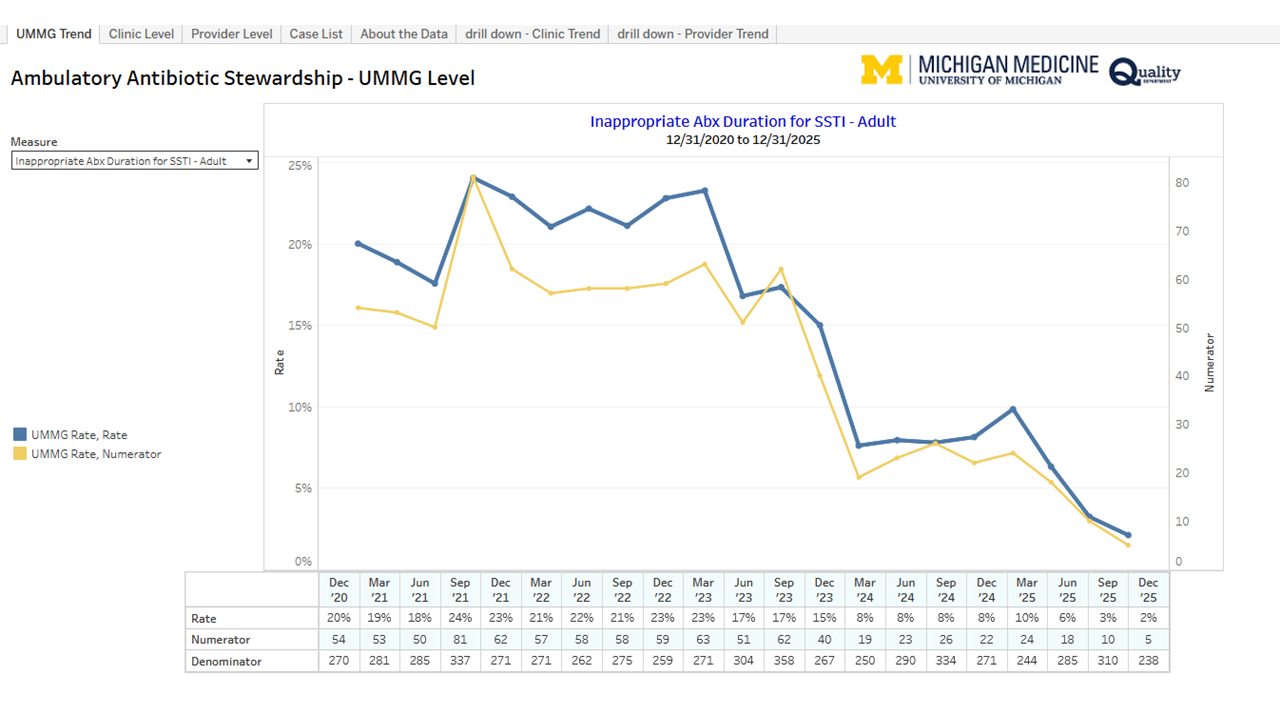
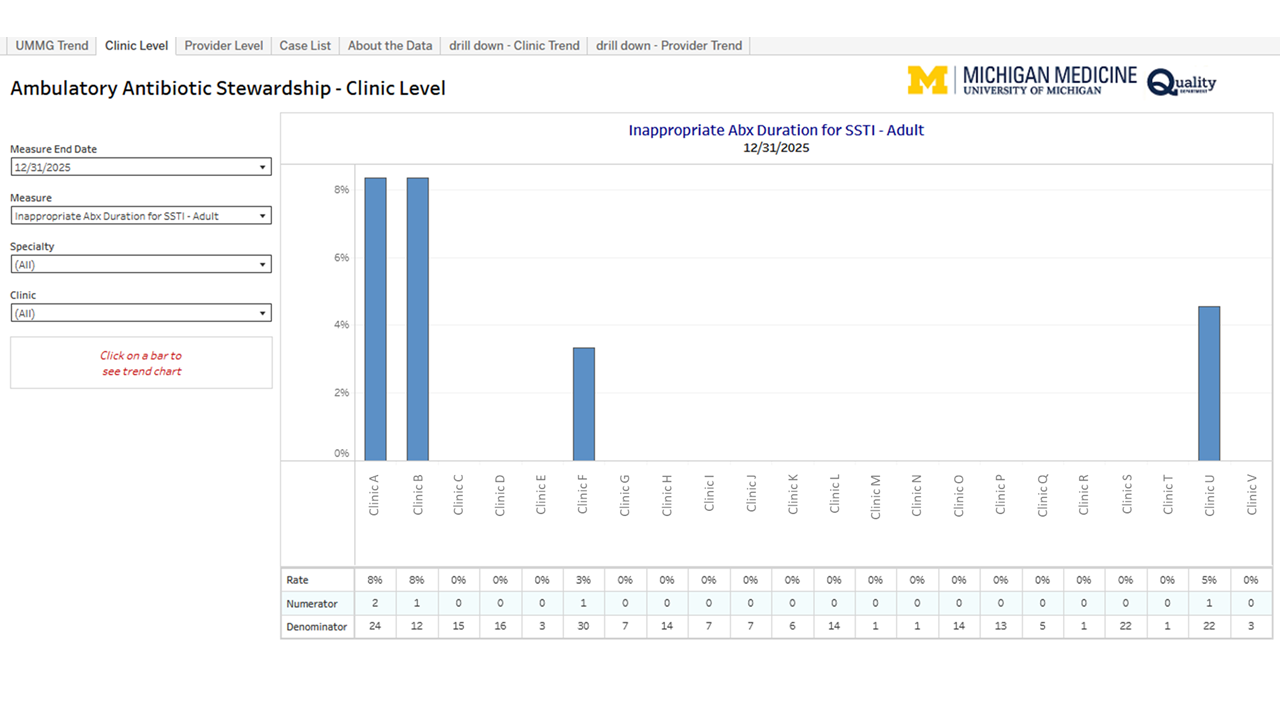
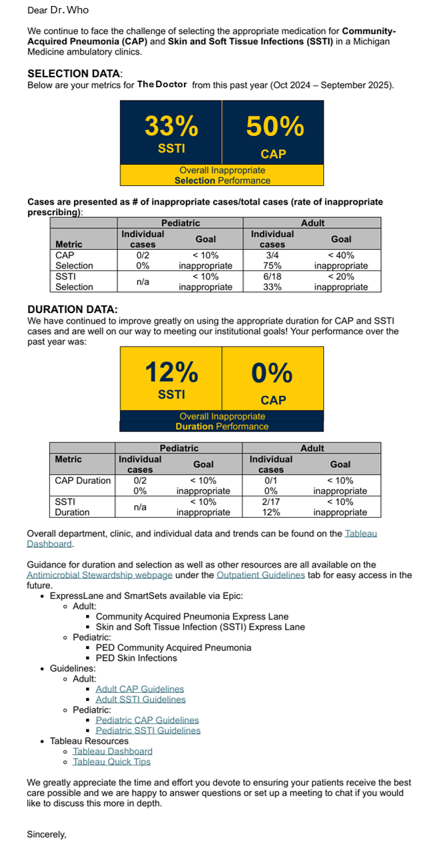
At the University of Michigan Medical Center, we sought to align institutional guidelines for community-acquired pneumonia and skin and soft tissue infections with national recommendations for shorter durations. We provided education to our five primary care divisions with over 600 individual providers and updated tools in Epic (Express lanes, SmartSets) to support reductions in duration to appropriate levels. We built a Tableau dashboard to track prescribing at multiple levels of individual providers, clinics and divisions, allowing for review of individual case data. Divisional performance feedback is provided at divisional business meetings annually. Quarterly, division chairs and service chiefs receive divisional data via email, and individual rate feedback is provided via email to each primary care provider. This feedback includes overall institutional performance as well as personalized provider rates of inappropriate prescribing for all cases over the past year. Next steps for the program include continuing to reduce inappropriate rates of duration towards the penultimate goal of < 10% inappropriate duration. The program has also started to incorporate metrics around appropriate selection for CAP and SSTI.
Impact and data
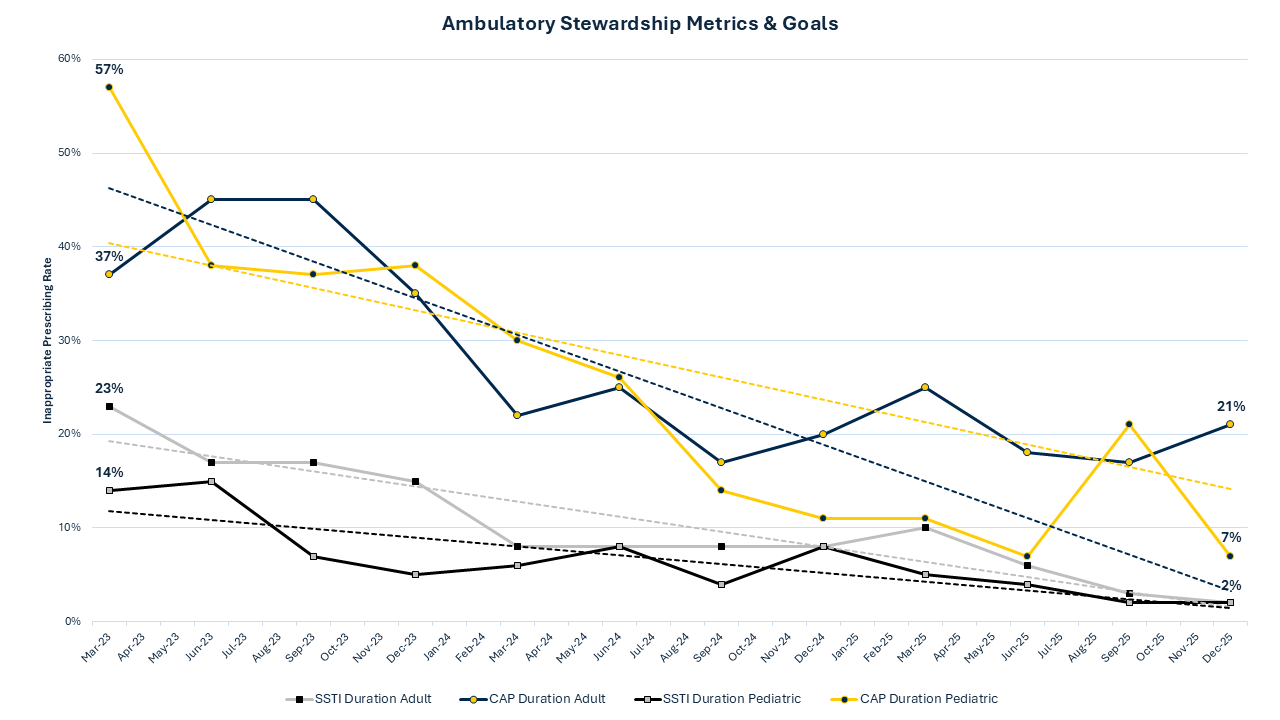
Overall, institutional metrics for adult inappropriate prescribing rates for SSTI duration have decreased from a baseline of 23% (Q1 2023) to 2% (Q4 2025). Pediatric metrics for SSTI have decreased from 14% (Q1 2023) to 2% (Q4 2025). Adult inappropriate prescribing rates for CAP duration have decreased from a baseline 37% (Q1 2023) to 21% (Q4 2025). Pediatric metrics for CAP have decreased from 57% (Q1 2023) to 7% (Q4 2025).
Implementation tips
There were several keys to successful implementation at our institution. First, committing to constant metric reviews to ensure high accuracy aided in provider confidence in the data when presented. Second, working with front-line providers to create specific EMR tools integrated in their practice as well as offering a range of tools as different areas utilize different materials. Finally, providing frequent and consistent messaging at department meetings/educations to emphasize the commitment to the metric and resources available for provider use.
Resources and tools
University of Michigan Dashboard (PNG)
University of Michigan Dashboard for Clinic (PNG)
University of Michigan Provider email (PNG)
Contact