

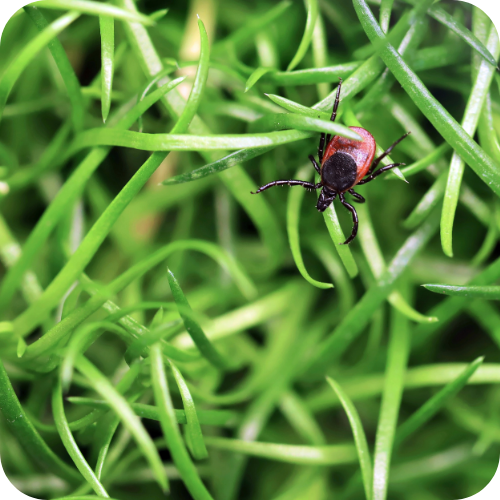
 Tick-borne diseases are the most common vector-borne infections in the United States, and Lyme disease has long dominated the conversation in endemic areas. But ticks are carrying more than Lyme disease alone, and co-infections are becoming harder to ignore. New research suggests ticks may harbor a wider mix of pathogens than we once thought, and co-infections in humans remain important to consider in the care of patients with suspected or proven tick-borne infections.
A recent study published in Ecosphere sheds light on this shift in the northeastern United States. Researchers examined more than 2,000 nymph-stage black-legged ticks (Ixodes scapularis) collected over nearly a decade in Dutchess County, New York. They found that many of these ticks carried pathogens capable of causing infection in humans, and some carried more than one at the same time. (1)
In fact, about 10% of the ticks studied were infected with at least two pathogens. The most common combination was Borrelia burgdorferi (the bacterium that causes Lyme disease) and Babesia microti, the parasite responsible for babesiosis. (1)
This matters clinically because these infections require different treatments. Lyme disease is typically managed with antibiotics like doxycycline, while babesiosis requires combination medications, usually atovaquone and azithromycin. If a single tick bite effectively transmits both infections, clinicians need to recognize and treat both.
Co-infections can also make diagnosis more challenging. Symptoms may overlap, and illness can be more severe or last longer than infections caused by a single pathogen. Together, these findings reinforce the need to think beyond Lyme disease alone when evaluating patients with suspected tick-borne illness in endemic regions.
Multiple pathogens, one vector
The study also showed just how many different pathogens ticks can carry. More than one-third of the ticks tested were infected with at least one pathogen known to cause human disease. (1) In addition to Borrelia burgdorferi and Babesia microti, researchers identified Anaplasma phagocytophilum and Borrelia miyamotoi. Less commonly, ticks carried Rickettsia species, and one tick tested positive for Powassan virus — a rare but potentially serious infection. (1)
One particularly notable finding was the rise of Babesia microti. Toward the end of the study period, it was detected frequently, in some cases more often than Borrelia burgdorferi in the ticks sampled. This suggests babesiosis may be becoming more prominent in parts of the Northeast and reinforces the need to consider diagnoses beyond Lyme disease. (1)
This trend isn’t limited to North America. In a Swedish study of Ixodes ricinus ticks removed from humans, 43.3% of Babesia-positive ticks were co-infected with Borrelia spp. (2) That suggests co-infections are not just a local issue in the northeastern U.S., but part of a broader pattern.
Why prevention matters even more now
Because a single tick bite can transmit multiple pathogens, prevention remains essential. The U.S. Centers for Disease Control and Prevention recommends several practical steps to reduce tick exposure: avoiding wooded or brushy areas with tall grass or leaf litter, using EPA-registered insect repellents, and treating clothing and gear with permethrin. It’s also important to check for ticks after spending time outdoors, shower soon after coming inside and remove any attached ticks promptly. (3) These steps are especially important in areas where multiple tick-borne pathogens are circulating.
What could change next
The complexity of tick-borne diseases also underscores the need for better prevention tools. As discussed in a previous Science Speaks blog post, several Lyme disease vaccine candidates are currently in development. (4) While there isn’t a human Lyme vaccine available in the United States yet, ongoing research could eventually change that. Vaccines, combined with existing preventive measures, could play an important role in reducing the burden of tick-borne disease.
Why this shift matters for clinicians
Long-term surveillance of tick populations and the potential pathogens they carry are keys to understanding the dynamic risks both within known endemic regions, but also new geographic regions where disease harboring ticks are spreading. Studies like this help clinicians stay informed about which pathogens are circulating locally and how often co-infections occur.
For clinicians, the takeaway is straightforward: Suspected tick-borne illness shouldn’t automatically be assumed to be Lyme disease or any other single tick-borne infection alone. Considering the possibility of co-infection can lead to more accurate diagnoses and better treatment decisions. As tick populations expand and the range of pathogens they carry grows, clinician awareness and prevention will become even more important.
References
- LaDeau SL, Oggenfuss K, Schmidt A, et al. Ecological dynamics of blacklegged ticks, vertebrate hosts, and associated zoonotic pathogens in northeastern forests. Ecosphere. 2025;16(12):e70508. doi:10.1002/ecs2.70508.
- Amato M, Siller A, Schennach H. Babesiosis and Its Significance in Transfusion Medicine from a European Point of View. Transfus Med Hemother. 2025;53(1):23-43.
- Centers for Disease Control and Prevention. Preventing tick bites. CDC. Updated August 28, 2024. Accessed March 18, 2026.
- Sanicas M. Tick-borne disease vaccines: What clinicians should know in 2026. Science Speaks. Infectious Diseases Society of America. Jan. 5, 2026. Accessed March 18, 2026.

